Back to Blog
Your AI agent can talk. But can it handle a customer?

October 22, 2026
•
AI Agents


Building an AI agent that answers a question is relatively easy.
Building an AI agent that can handle an actual customer conversation? That’s where things get interesting.
Customers interrupt. They change their minds. They leave out important information. They start with “Where’s my order?” and, three messages later, they’re asking whether they can change the delivery address, get are fund and speak to someone about a completely different product.
Very inconsiderate of them.
That unpredictability is exactly why customer-facing AI agents need more than a good language model. They need context, access to the right business knowledge and the ability to keep a conversation moving when reality refuses to follow a neat flowchart.
That’s the challenge Microsoft is addressing with the new customer conversation harness in Microsoft Copilot Studio. Microsoft describes it as a way to build customer-facing AI agents by connecting voice, chat, business knowledge and contact-centre experiences.
And although that sounds like a product update, the bigger story is more interesting.
We’re moving from chatbots that answer questions to AI agents that participate in conversations.
A customer-facing AI agent is an AI-powered system designed to interact directly withcustomers, understand their intent, use relevant business information and help them move towards an answer or outcome.
That’s an important distinction.
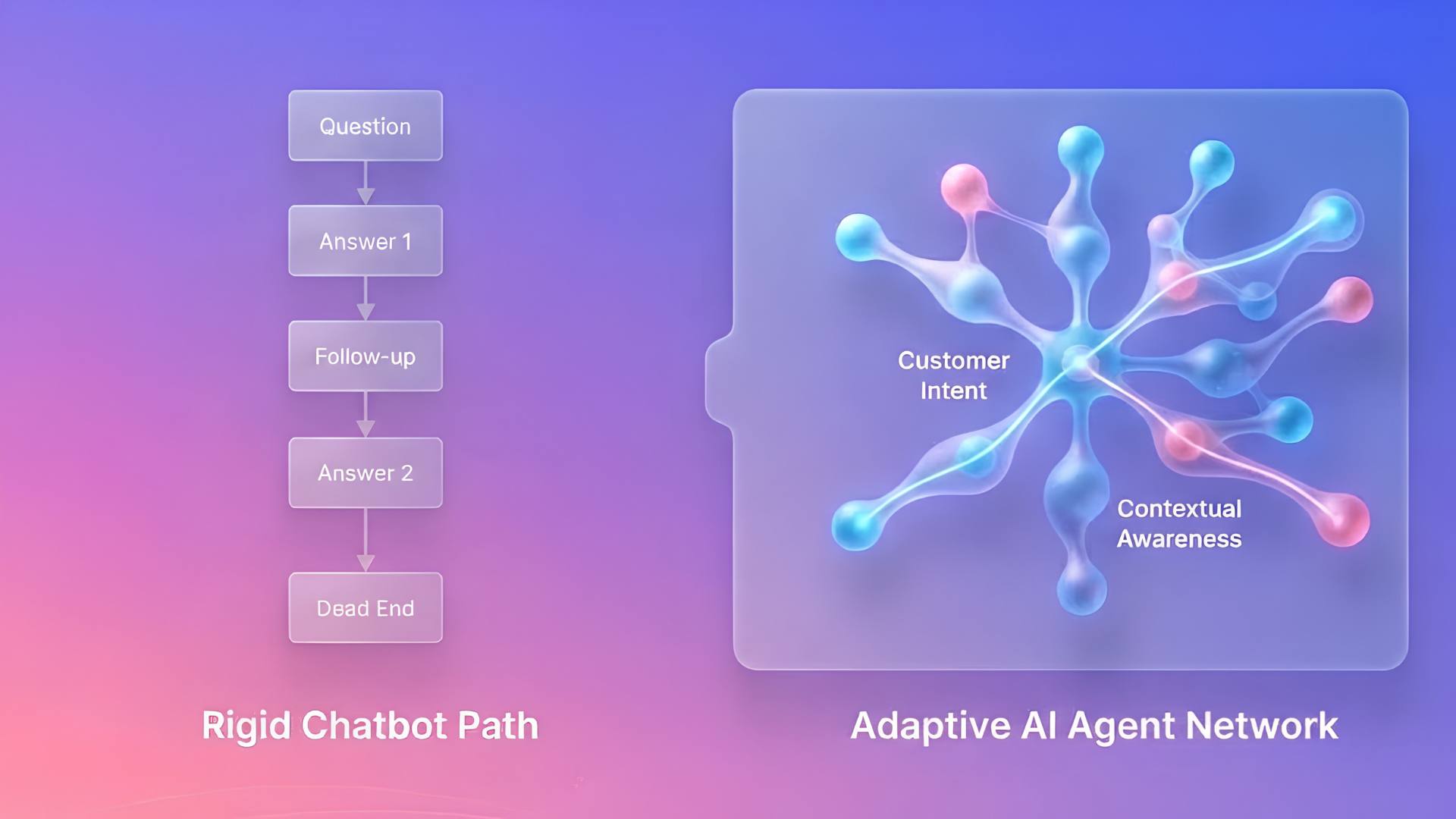
Traditional conversational design patterns have often relied on relatively rigid journeys:
Question. Predefined answer. Next question. Another predefined answer.
That works perfectly well when a customer asks:
“What time do you close?”
It becomes much less useful when they say:
“My delivery hasn’t arrived, I won’t be home tomorrow and I’ve just realised I entered my old address. Can you help?”
Now there are several intentions inside one conversation.
A useful AI agent needs to maintain that context rather than treating every new message like a fresh FAQ search.
That direction also fits what we’re already seeing in multi agent orchestration. Instead of building one enormous agent that attempts to know and do everything, organisations can create specialised capabilities, tools, knowledge sources and instructions that are brought into play according to the context of a conversation.
The customer shouldn’t need to understand what’s happening behind the scenes.
They just want their problem solved.
Imagine a customer contacting an airline:
“My flight tomorrow has been cancelled. Can you move me to an earlier flight?”
A simple chatbot might find information about the airline’s cancellation policy.
That’s an answer.
It isn’t necessarily a solution.
A more capable customer-facing agent could understand why the customer has contacted the company, maintain the context of the conversation and bring the appropriate knowledge or business capabilities into the interaction.
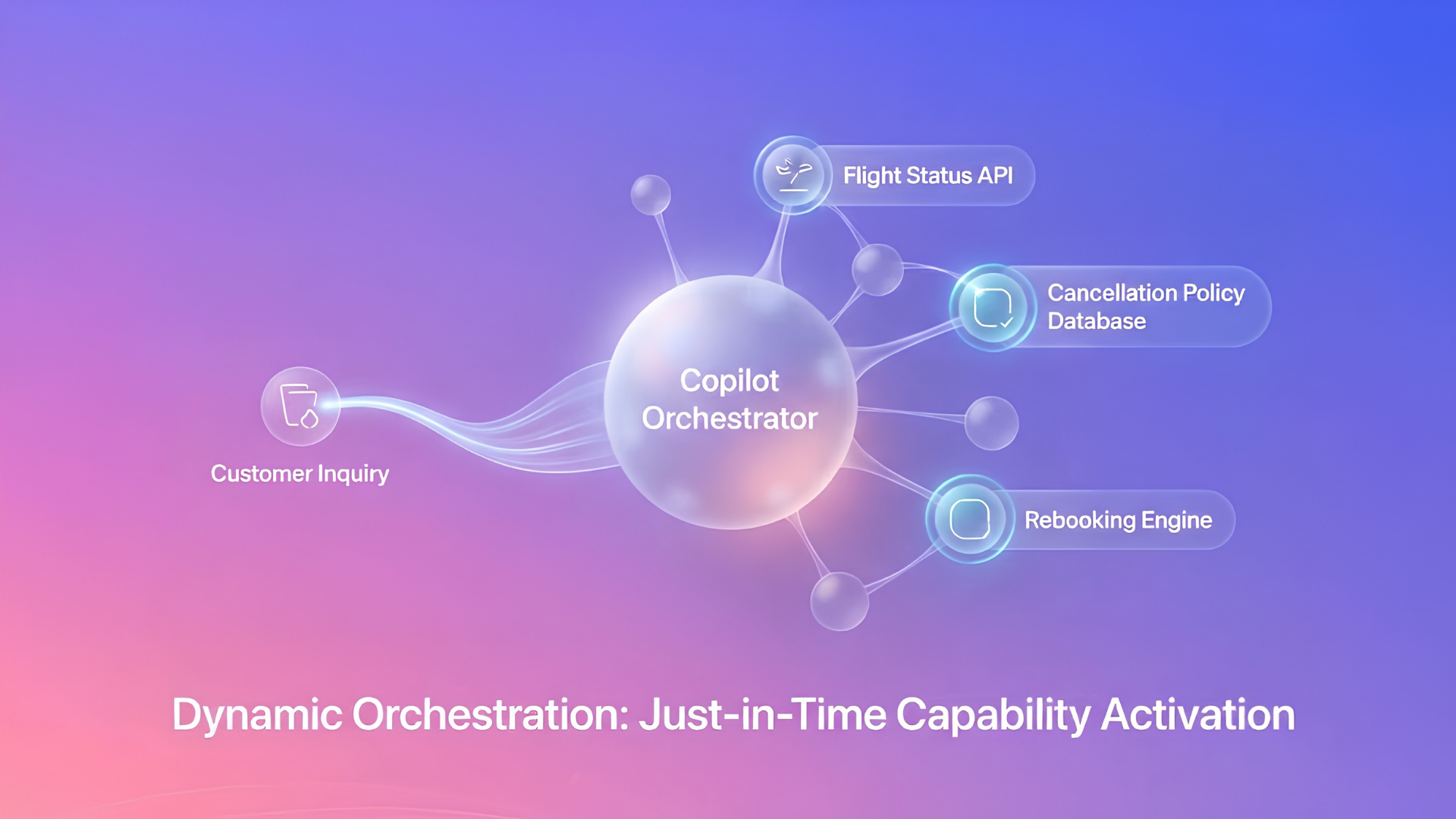
Suddenly, the conversation becomes less about finding information and more about getting something done.
And that creates interesting possibilities across industries.
Retail: “Where’s my order?”
It starts as a tracking question.
Then the customer discovers their parcel is delayed. They want to change the delivery date. Then the address. Maybe they decide they’d rather cancel the order al together.
From the customer’s perspective, that’s one conversation.
Designing an agent around that complete journey can be considerably more useful than building four very good FAQ answers and hoping the customer pieces them together.
Financial services: “What does this mean for me?”
Customer conversations in financial services can quickly become complicated.
An AI agent could help customers navigate approved product information, understand processes or find the right support route.
But the stakes are also higher.
The agent needs access to the right information, appropriate regulatory compliance frameworks and clear boundaries around what it should and shouldn’t do.
Fluency is useful. Confidently saying the wrong thing is not.
IT support: “My laptop hates me”
Not the officially approved incident category, admittedly.
But it’s exactly how humans communicate.
An internal service agent could help understand the actual problem, retrieve relevant trouble shooting information and guide an employee towards the right next step.
If the problem requires a human, the conversation can move there with useful context already established via seamless human handover.
The prize isn’t simply fewer support tickets. It’s fewer dead ends.
Microsoft Copilot Studio is already designed to make agent creation accessible beyond traditional software development teams, and Digital Bricks has covered everything from dynamic agent orchestration to choosing between different Copilot Studio experiences.
That’s good news for experimentation.
It also means organisations can potentially create bad agents faster than ever.
An agent can have impressive AI capabilities and still be surprisingly unhelpful if its knowledge is badly organised, its instructions are unclear or nobody has decided when it should hand a conversation over.
There’s another layer too: once an agent has access to business systems and data, security and governance become part of the design itself. Digital Bricks has previously explored how prompt injection risks can create vulnerabilities in Copilot Studio agents when permissions and guardrails do not match the ways people actually interact with the system.
Before building a customer-facing AI agent, then, there aresome less glamorous but much more important questions to answer:
What problem is the customer actually trying to solve?
Which knowledge should the agent be allowed to use?
Which systems or actions does it genuinely need access to?
What shouldn’t the agent be allowed to do
When should a person take over?
How will you know whether the experience is actually working?
The shiny demo can come later.
There is another ingredient in building good AI agents that doesn’t always get the same attention: content.
Imagine your organisation has four versions of its returns policy.
One is on the website. Another is buried in SharePoint. There’s an old PDF that nobody has removed yet. And somewhere, inevitably, someone has an Excel file called:
Returns_policy_FINAL_v7_really-final.xlsx
Which one should an agent trust?
Connecting an AI agent to organisational knowledge doesn’t magically make that knowledge accurate, current or useful.
In fact, it can expose information problems that were already hiding below the surface through poor knowledge management.
Digital Bricks’ work with knowledge sources and orchestration in Copilot Studio illustrates why this matters. Different scenarios can require different approved tools,sources, instructions and compliance boundaries.
Good customer-facing AI agents therfore need good information foundations.
That means clearly written knowledge, identifiable sources of truth, sensible access controls and someone taking responsibility for keeping information current.
Suddenly, content house keeping doesn’t sound quite so boring.
When a new technology appears, there’s a natural temptation to open the tool and start building.
We’d recommend starting somewhere else.
Listen to your existing conversations.
What are customers repeatedly asking your support teams?
Where does a seemingly simple request currently require three systems and two departments?
Which interactions mostly consist of employees searching for information?
Where does a customer lose context when moving from self-service to a human?
Those conversations often reveal much better AI agent opportunities than starting with a list of product features.
Then comes the harder question: Should this interaction be handled by an agent at all?
Something being technically possible doesn’t automatically make it valuable. Organisations also need appropriate governance around the agent and its data, while customers and employees ultimately need to trust the resulting experience enough to use it.
Otherwise, you’ve built a very clever piece of software that everyone avoids.
This is also where Digital Bricks can help. We work with organisations to identify the conversations worth improving and turn those opportunities into working solutions, with technology, data governance and adoption considered from the beginning.
Because the goal shouldn’t be to build an agent just because you can.
It should be to make something meaningfully better.
The significance of Microsoft’s customer conversation harness isn’t simply that there’s another capability available in Copilot Studio.
It points towards a different way of thinking about digital customer experience.
For years, businesses have tried to make customer conversations predictable enough for software.
Customer-facing AI agents create the possibility of handling more of the messiness of a real conversation: changing intent, different kinds of questions and information that becomes relevantas the interaction develops.
And as dynamic orchestration in Copilot Studio shows, the underlying agent architecture can become more contextual too, with different specialised capabilities activated according to variables such as region, product, role or service tier.
That doesn’t mean throwing away structure, controls or humansupport.
Quite the opposite.
The more capable an agent becomes, the more deliberate organisations need to be about its knowledge, permissions, escalation paths and purpose.
So the question is changing.
It’s no longer simply: “Can we build an AI agent?”
Increasingly, it’s: “Can we build an agent our customers will actually wantto talk to?”
That’s a much better place to start.
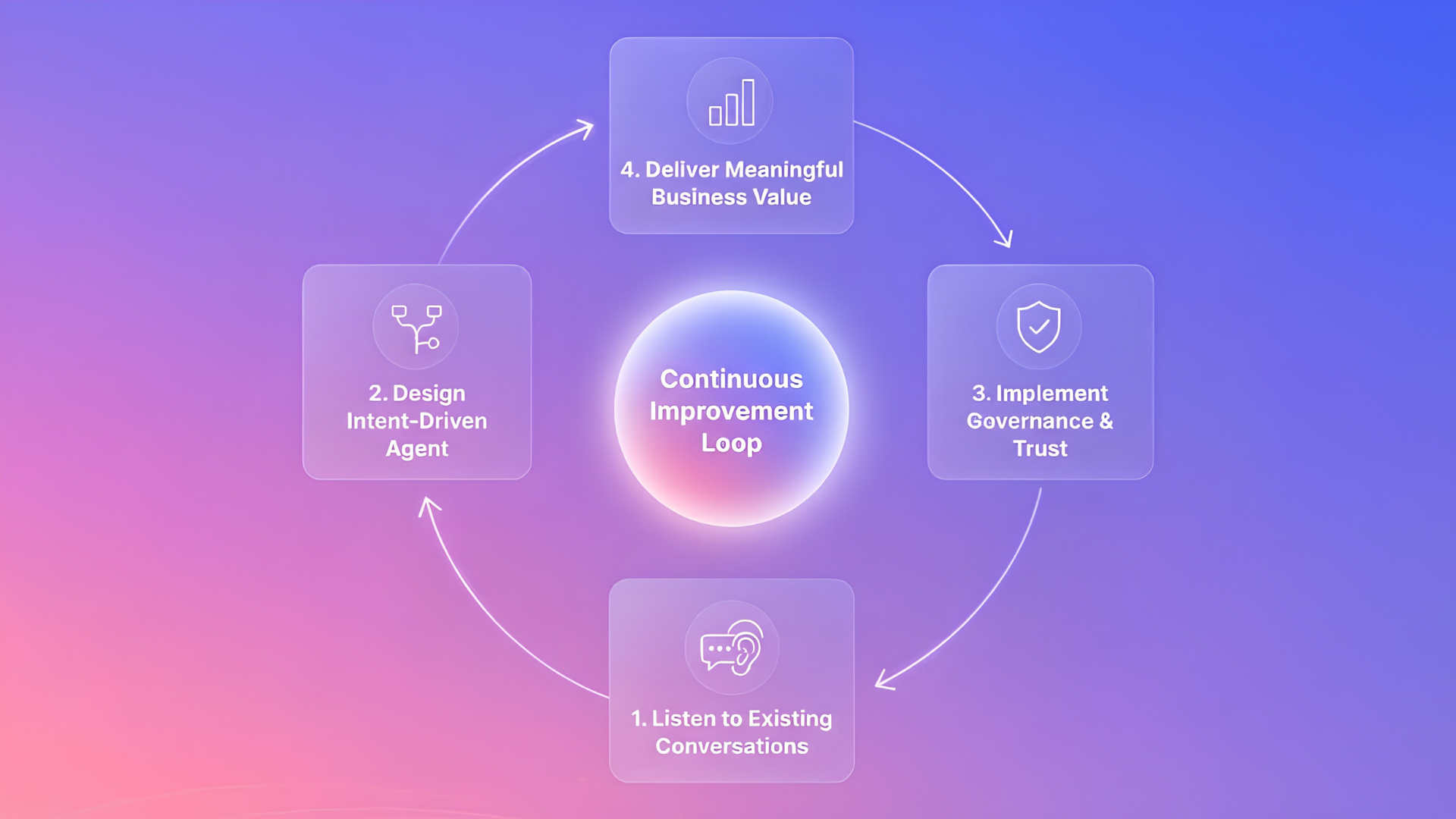
If your organisation is exploring customer-facing oremployee AI agents, start with the conversations people are already having.
Digital Bricks can help you identify the right opportunities, design the agent experience and put the governance and adoptionfoundations around it so that it works beyond the demo.


Unlock exclusive insights and stay ahead in the digital world. No spam, only useful content.