Back to Blog
AI Transparency and the Future of AI Adoption: Why Trust Is Becoming the New Competitive Advantage

September 17, 2026
•
AI Adoption


For the past few years, the AI industry has been obsessed with one goal: making technology disappear. The best chatbot was the one that felt human. The best AI assistant was the one that blended seamlessly into a conversation. The best generated image was the one nobody could distinguish from a real photograph. Success was measured by how invisible AI systems could become.
And for a while, that made perfect sense. The more natural AI felt, the easier it was for people to adopt it. Organisations invested heavily in creating smoother customer experiences, more intuitive digital services and increasingly sophisticated AI-powered products. Every new break through pushed the line between human and machine interaction a little further out of sight.
Now that trend is colliding with a new reality. From August 2026, key transparency obligations under the European Union's AI Act require organisations to become much more explicit about where AI is being used and when people are interacting with it. While much ofthe conversation surrounding the regulation focuses on risk classifications and compliance requirements, the broader significance is easy to miss. For the first time, organisations are being asked to reverse a decade-long designtrend. Instead of making AI less visible, they are increasingly expected to make it more visible.
That might sound like a relatively small adjustment. Inpractice, it could fundamentally reshape how organisations think about AI-enabled products, customer interactions and digital trust. Because transparency is no longer simply a regulatory topic. It is rapidly becoming a business topic, a customer experience topic and, perhaps most importantly, a trust topic.
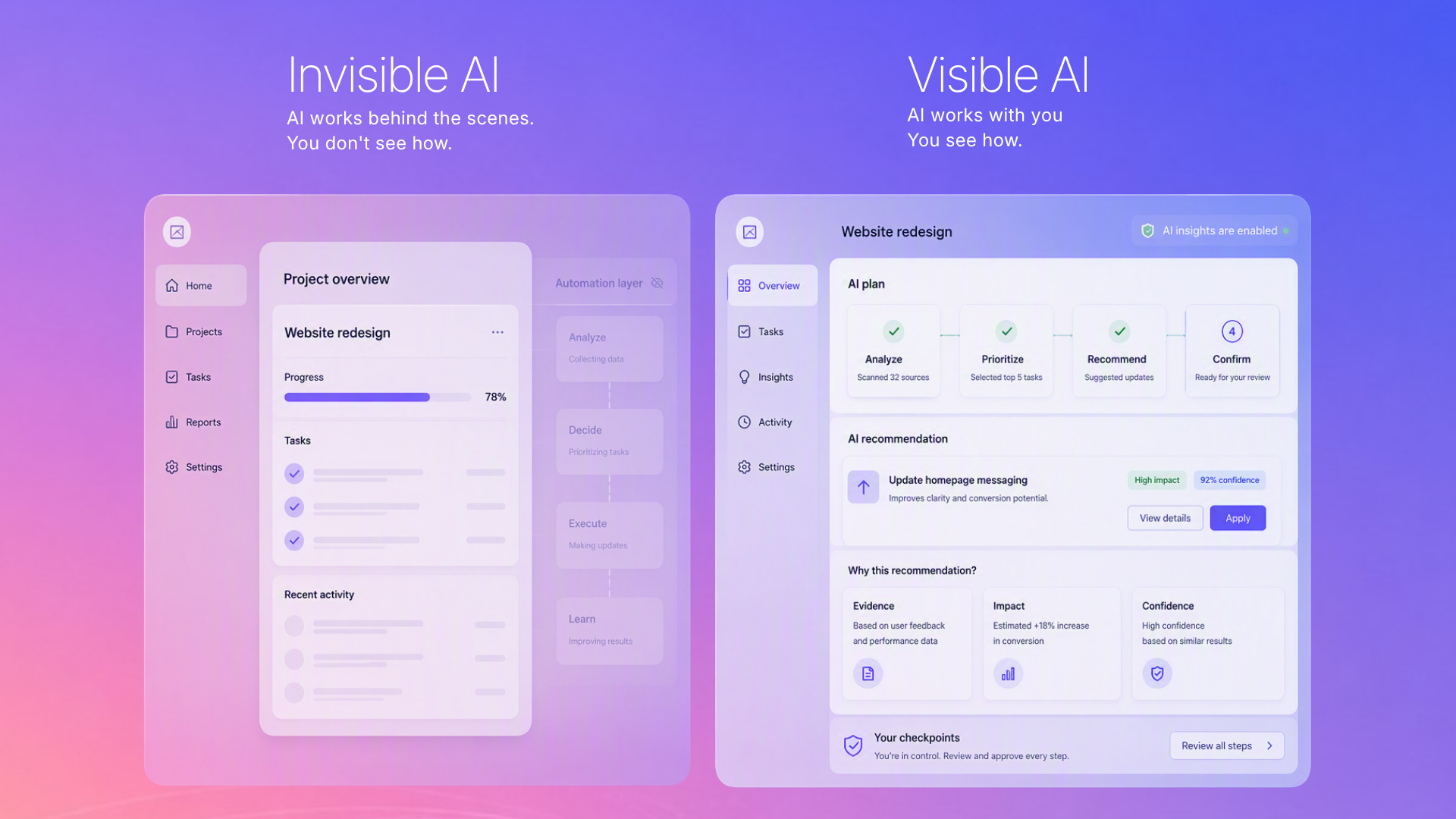
The rapid rise of generative AI hascreated a situation that would have sounded improbable only a few years ago. AI systems are becoming more capable at precisely the moment people are becoming less certain about what they are seeing, hearing and interacting with.
An image might be authentic or entirely synthetic. A report could be written by a consultant, generated by AI or created through a combination of both. A customer service conversation may take place with a human employee, an AI assistant or a carefully orchestrated mix of the two. As the quality of AI-generated content continues to improve, distinguishing between these possibilities becomes increasingly difficult.
Consider a customer contacting an airline about a delayed flight. The first interaction may be handled by an AI-powered chatbot that gathers the relevant information. The rebooking options may be generated by AIbased on availability, pricing and previous customer preferences. A human employee may only step in when an exception needs to be made or a complaint requires judgement. From the customer's perspective, the experience feels seamless, but without transparency it can be difficult to understand which parts of the interaction were automated and which relied on human decision-making. As AI becomes more embedded in everyday services, these distinctions matter more than ever.
For organisations, that uncertainty creates challenges that stretch far beyond compliance. Customers want confidence in the authenticity of information. Employees want clarity about how AI is being introduced into their workflows. Leadership teams want assurance that innovation is happening responsibly and that trust is not being sacrificed in pursuit of efficiency. In many cases, people are not concerned about AI itself. They are concerned about the lack of transparency surrounding it.
This is why the transparency requirements emerging across Europe are so significant. Their purpose is not simply to force organisations to add labels or disclaimers. Their purpose is to create clarity inenvironments where AI is becoming increasingly difficult to detect. The objective is simple: help people understand when AI plays a meaningful role inan interaction and give them the context needed to make informed decisions.
Many organisations are still approaching AI transparency through a strictly regulatory lens. Their first instinct is to ask what they need to disclose, where they need to disclose it and what risks come with getting it wrong. Those are important questions, but they are not necessarily the most interesting ones.
A more strategic question is: what do people need tounderstand?
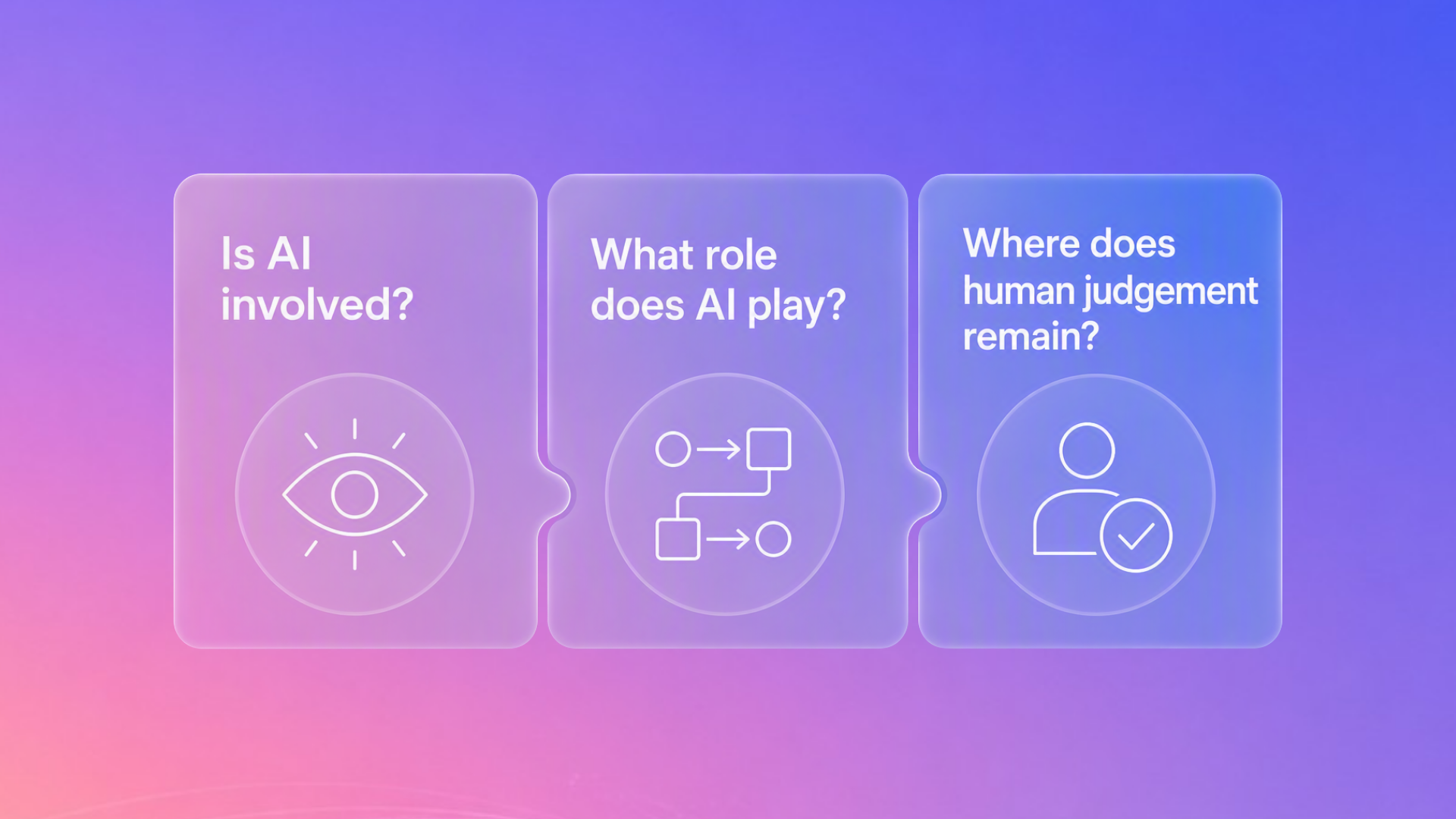
There is an important difference between transparency as an obligation and transparency as an experience. The minimum compliance approach focuses on satisfying regulatory requirements. The more mature approach focuses on helping people navigate an increasingly AI-driven world with confidence.
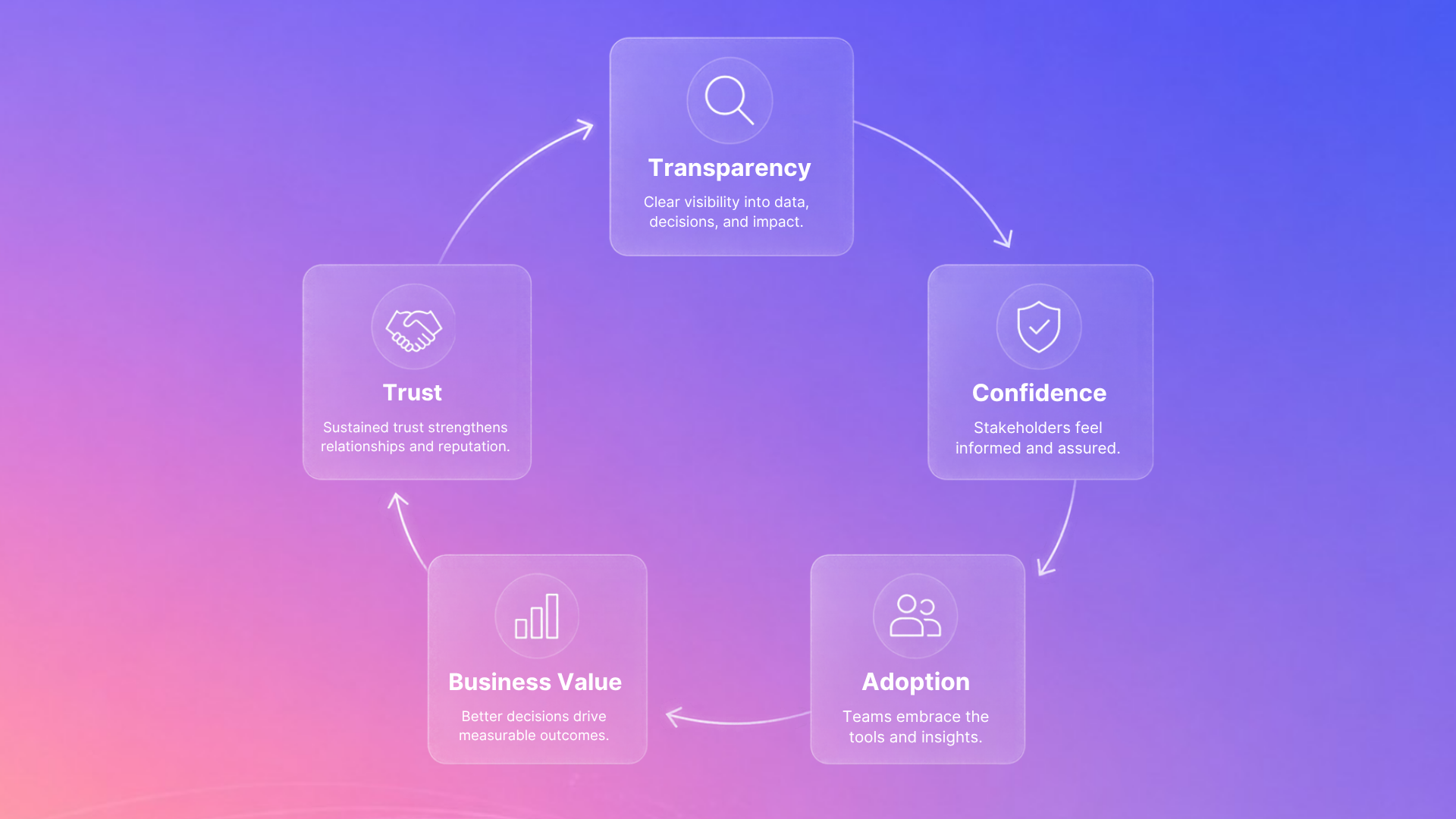
We have seen similar transitions before. Online banking accelerated because customers learned to trust digital transactions. E-commerce exploded because organisations invested heavily in creating transparent andreliable customer experiences. Cloud technologies became mainstream once organisations understood how their data was managed and protected. In each case, trust acted as an accelerator rather than a barrier.
The same dynamic is likely to shape the next phase of AI adoption. Organisations that treat transparency as an after thought may satisfy the letter of the law. Organisations that embed transparency into the design of products, services and customer experiences are more likely to earn long-term confidence from the people who use them.
There is a common assumption that transparency slows down innovation. The argument is that additional disclosures, governance processesand accountability requirements create friction in environments that need speed and experimentation.
The evidence from previous technology shifts suggests the opposite. New technologies rarely scale successfully because people are forced to accept them. They scale because people become comfortable enough to embrace them.
That principle is becoming increasingly relevant for AI. As capabilities become more advanced and more widely available, technology it selfis becoming less of a differentiator. Most organisations will eventually have access to powerful AI tools. The real difference will lie in how effectively those tools are introduced, explained and integrated into everyday experiences.
Forward-thinking organisations are already recognising this shift. Rather than treating transparency as a legal requirement owned exclusively by compliance teams, they are beginning to view it as part of AI product design,employee communication and customer engagement. They are asking how AI interactions should be presented, how AI-generated content should be explained and how users can better understand the systems they engage with every day.
In that context, transparency becomes much more than a check box exercise. It becomes part of the overall quality of the experience.
Perhaps the most interesting aspect of the AI Act'stransparency requirements is what they reveal about the future direction of the market. For years, organisations competed to make AI feel invisible. Innovation was measured by how effectively technology blended into the background. The next phase of AI adoption may reward something very different.
The organisations that succeed may not be the ones that hide AI best. They may be the ones that make it easiest to understand.
That does not mean filling every interaction with warnings,disclaimers or unnecessary labels. It means creating clarity where clarity matters. It means helping people understand when AI is involved, what role it plays and where human judgement continues to shape outcomes.
As AI becomes more deeply embedded into business operations,customer experiences and everyday decision-making, trust will become increasingly valuable. And trust rarely emerges from uncertainty. It emerges from transparency, consistency and clear communication.
The conversation around AI is often dominated by what the technology can do next. Yet the more important question may be whether people are willing to trust it when it does. The organisations that answer that question successfully will not simply be the leaders in AI innovation. They will be the leaders in AI adoption.
This article discusses the growing importance of transparency in the age of AI. So it's only fair to mention that AI was also part of the writing process.
The first draft was generated with the support of AI, but the article you have just read went through multiple rounds of review, challenge and refinement by the Digital Bricks team. Facts were checked, arguments were strengthened, and the final perspective remains distinctly human.
Perhaps that's exactly what the future of content creation looks like: AI contributing to the process, humans remaining accountable for the outcome.
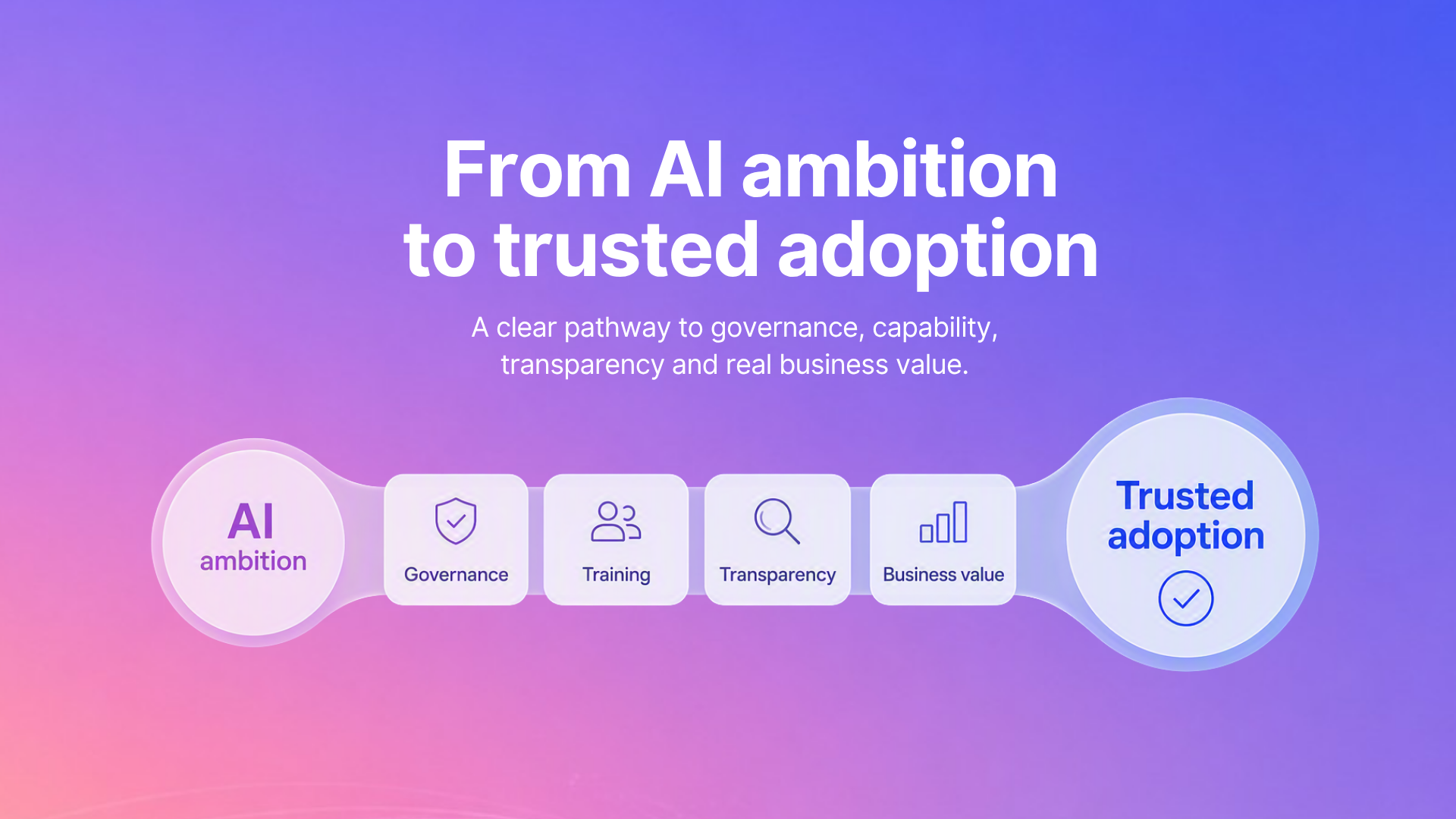
At Digital Bricks AI,we help organisations move from AI ambition to responsible adoption. FromMicrosoft 365 Copilot enablement to AI governance, training and change management, our team supports businesses in making AI practical, transparent and trusted across the organisation.
Want to make AI adoption work for your organisation? Explore how Digital Bricks AI can help you build the confidence, governance and practical skills needed to turn AI into real business value.


Unlock exclusive insights and stay ahead in the digital world. No spam, only useful content.