Back to Blog
Why the Human Layer Will Define Europe’s AI Future

September 22, 2026
•
AI Adoption


AI adoption in Europe is accelerating, but many organisations are still standing at the edge of the diving board, looking down rather than jumping in.
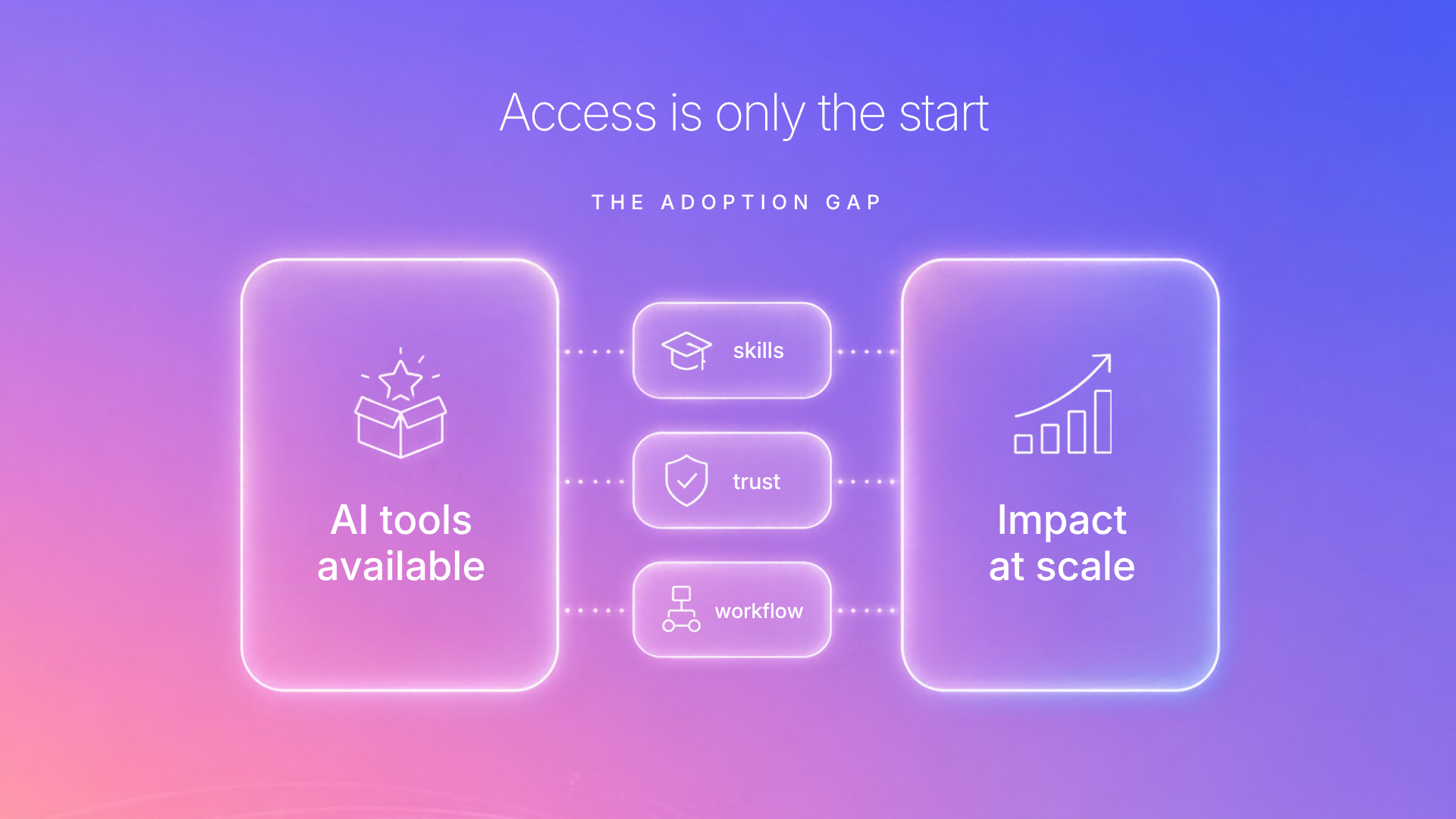
The real challenge is no longer access to AI technology but building the human layer that turns AI potential into everyday impact.The contrast becomes clear in the data. According to the CBS AI Monitor 2024, more than six in ten Dutch organisations already use AI, placing the Netherlands ahead of the European average. At the same time, only a small minority consider themselves ready for the next wave of AI, from autonomous agents to deeply embedded AI-powered business processes. In other words, adoption is no longer the main signal of progress. The real question is whether organisations can turn early use into safe, sustainable and scalable value.
That gap between experimentation and meaningful adoption may be the most important challenge facing Europe's AI future.
For years, the conversation around European AI has been dominated by what we supposedly lack. Not enough capital. Not enough hyperscalers. Not enough scale.
But that's becoming an increasingly outdated narrative.
Europe has world-class universities, exceptional research talent, a growing startup ecosystem and a strong industrial base. The Netherlands in particular has become one of Europe's most active AI markets. What is becoming clear is that the challenge is not creating more innovation. It's connecting innovation to real-world execution.
That is precisely why initiatives such as The Stack in Amsterdam are attracting attention. Not because Europe needs another building filled with founders and investors, but because ecosystems create momentum. When entrepreneurs, researchers, operators and enterprises work in close proximity, ideas move much faster from concept to commercialreality.
Innovation rarely fails because of a lack of brilliant ideas. More often, it fails because the path from possibility to practice is fragmented.
Europe's opportunity lies in becoming exceptionally good at closing that gap.
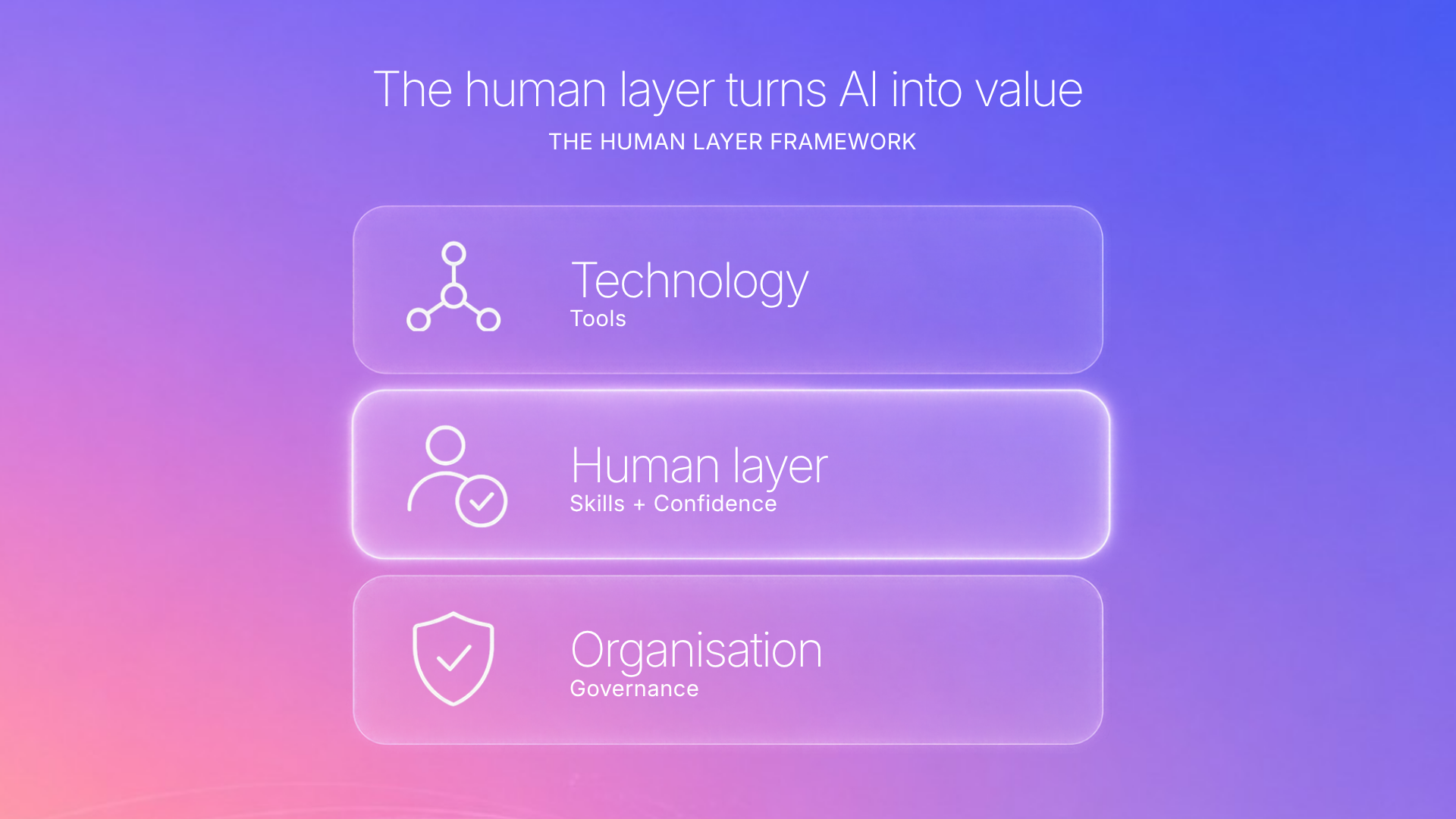
When people discuss AI ecosystems, they often focus on models, infrastructure, investment and applications. But there is another layer becoming increasingly important.
The layer that translates AI potential into organisational reality. The layer that helps organisations move from isolated pilots to everyday workflows. The layer that turns employee curiosity into capability. The layer that ensures innovation can survive contact with legal, security and operational requirements. That's where Digital Bricks sits.
With The Stack opening in the same innovation environment, the relevance of that human layer becomes even clearer. Digital Bricks is not another infrastructure provider or software platform. We operate in the space between technology and people, helping organisations translate AI potential into practical ways of working. Because that is where most AI initiatives succeed or fail.
Organisations do not struggle because they cannot access powerful AI models. They struggle because employees do not know where to start. Leaders are unsure what good looks like. Security teams are concerned about risk. Legal teams are navigating a regulatory landscape that continues to evolve.The technology is available. The translation work remains.
One finding stands out from recent research into Dutch AI adoption: the biggest barrier is no longer technology. It's capability. Many organisations have access to AI tools. Far fewer have equipped their workforce to use them effectively. Even fewer have created repeatable methods for identifying opportunities, prioritising use cases and embedding AI into daily operations.This matters because the next chapter of AI will not be driven by technology alone. Agentic systems, autonomous workflows and AI-powered business processes require a different level of organisational maturity. Deploying the tools is the easy part. Building confidence, understanding and practical experience across the workforce is considerably harder.The organisations creating the biggest advantage today are not necessarily those with the most advanced technology. They are the ones creating the fastest learning loops.
A practical example makes this easier to see. Imagine a client services team that wants to use Microsoft 365 Copilot to prepare for weekly customer meetings. Technically, the tool can summarise previous emails, draft agenda points and help turn meeting notes into follow-up actions. But without the right human layer, the team may not know which prompts to use, which information is appropriate to include or when a human check is required. After all, even the smartest assistant still needs someone to tell it what meeting it is preparing for. In that situation, responsible AI adoption is not solved by switching the tool on. It starts with a simple workflow: define the meeting use case, agree what data may be used, teach the team how to ask better questions, create a quality check before outputs are shared and collect feedback after a few weeks. The result is practical adoption: employees save time, clients receive clearer follow-up and the organisation builds confidence without losing control.
They help employees experiment safely. They make AI relevant to actual work. They create practical pathways from interest to impact. In other words, they focus on people as much as platforms.
Whenever regulation enters the conversation, enthusiasm often leaves the room.That is understandable. Compliance can feel like friction. It is not usually the slide people cheer for in a presentation, but it is often the one that keeps the entire story standing.
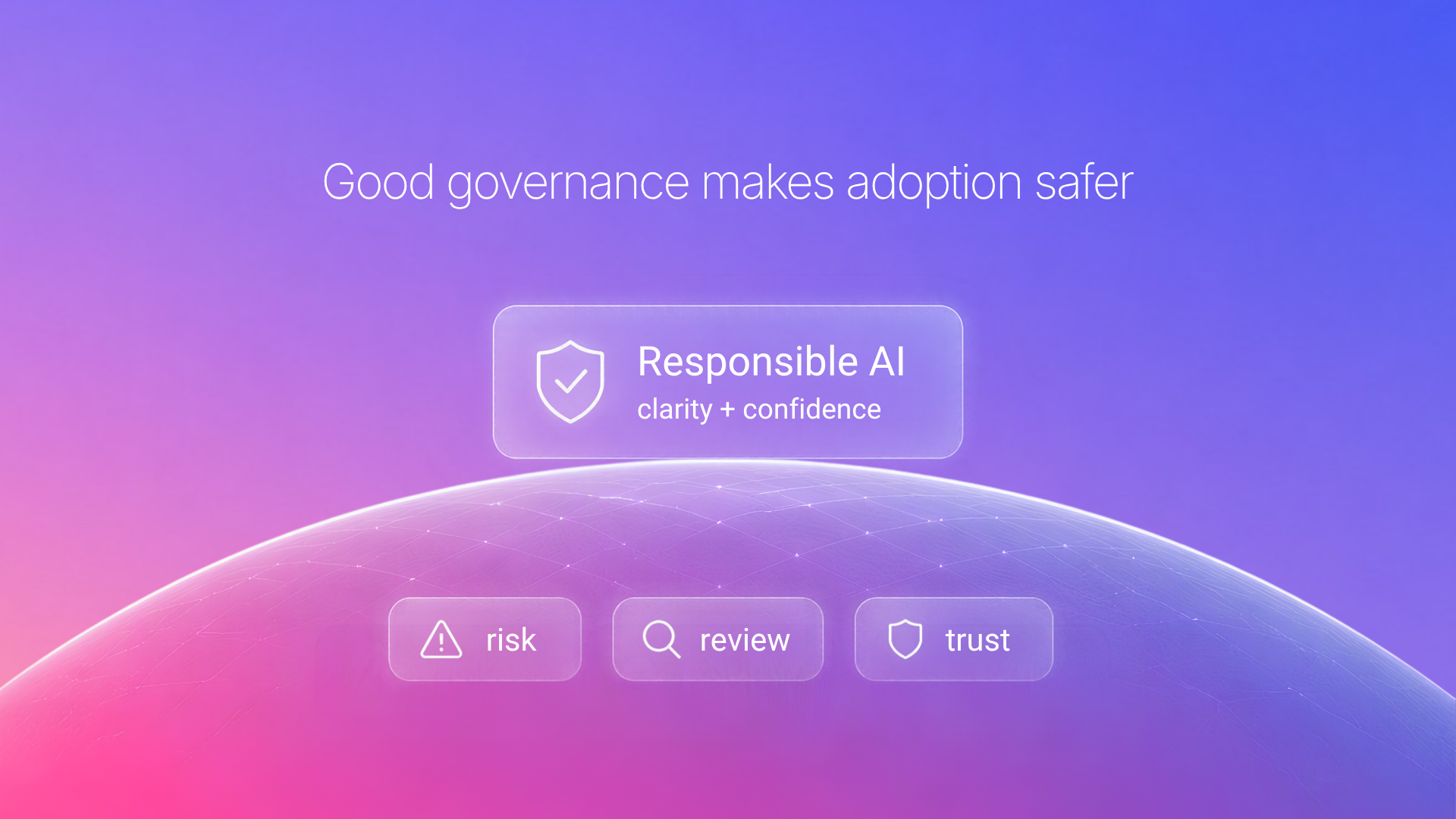
But the debate around the EU AI Act is often framed incorrectly. Many organisations see regulation as something they must address after adoption. In reality, organisations that build responsible AI practices from the beginning are often able to move faster, not slower.
The EU AI Act provides clarity about how AI should be developed, deployed and monitored across Europe. For organisations trying to scale AI responsibly, clarity is valuable. The challenge is translating regulation into practical action. What does good AI usage look like for employees? How should organisations assess risk? Which use cases require additional oversight? How do leaders create confidence that innovation and responsibility can coexist? These are not purely legal questions. They are operational questions.And they require practical answers.
At Digital Bricks, we help organisations bridge that divide. Not by overwhelming teams with policy documents, but by embedding responsible AI practices into the way people work. The goal is simple: create an environment where employees can innovate confidently while ensuring organisations remain aligned with the expectations of the EU AI Act. The organisations that treat responsible AI as part of adoption rather than a separate exercise will be the ones that scale most effectively.
Europe's AI future will not be determined by a single breakthrough model or a single startup success story. It will be shaped by thousands of organisations learning how to use AI effectively. By employees discovering new ways of working. By leaders creating environments where innovation can thrive without compromising trust.
The Netherlands has already demonstrated that adoption is possible.The next challenge is turning adoption into capability.That requires ecosystems like The Stack. It requires organisations willing to invest in skills. And it requires practical partners who can help translate possibility into everyday progress.
That's where Digital Bricks fits into the broader AI ecosystem. Not as another AI tool. As a practical partner helping organisations build what comes next. If you are exploring how to accelerate AI adoption, build workforce confidence and stay aligned with the EU AI Act, Digital Bricks can help translate ambition into practical progress. We would be happy to share what we are seeing across organisations navigating the same challenge.


Unlock exclusive insights and stay ahead in the digital world. No spam, only useful content.