Back to Blog
The Bigger Truth About Enterprise AI Adoption: It's Not About the Model

August 25, 2026
•
Learning


Every few months, a new AI model captures attention, and businesses scramble to work out what it means for their enterprise AI adoption strategy. ChatGPT. Gemini. Claude. Walk into any office today and you'll hear the same questions.
"Have you tried the new Model?"
"Is it better than the other one?"
"Which model should we be using?"
It feels eerily familiar. A bit like the early days of the internet. Everybody was obsessed with browsers. Internet Explorer versus Netscape. Netscape versus Firefox. Firefox versus Chrome.
The headlines focus on benchmarks, capabilities, and new features. Organisations rush to test the latest release and employees begin experimenting with the technology. But the businesses creating real value from AI aren't winning because they chose the right model. They're winning because they've learned how to work with AI. The lesson organisations can learn from Claude isn't about Claude itself. It's about developing the skills, behaviours, and governance needed to thrive in an AI-powered workplace.
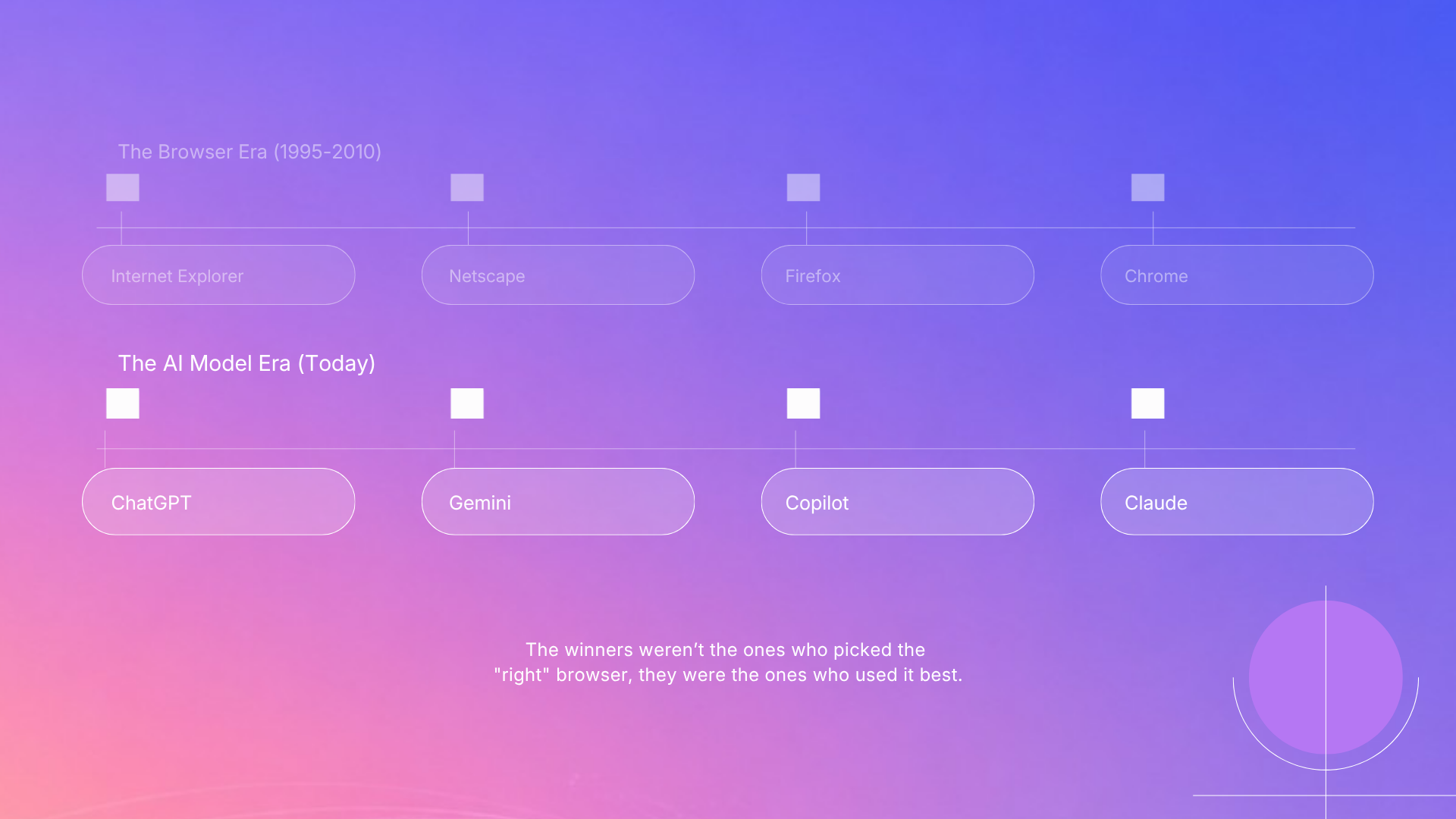
Which model is the best is an understandable question. But it's rarely the most important one for your organisation's long-term success.
A better question is: "How do we help our people become effective AI users?"
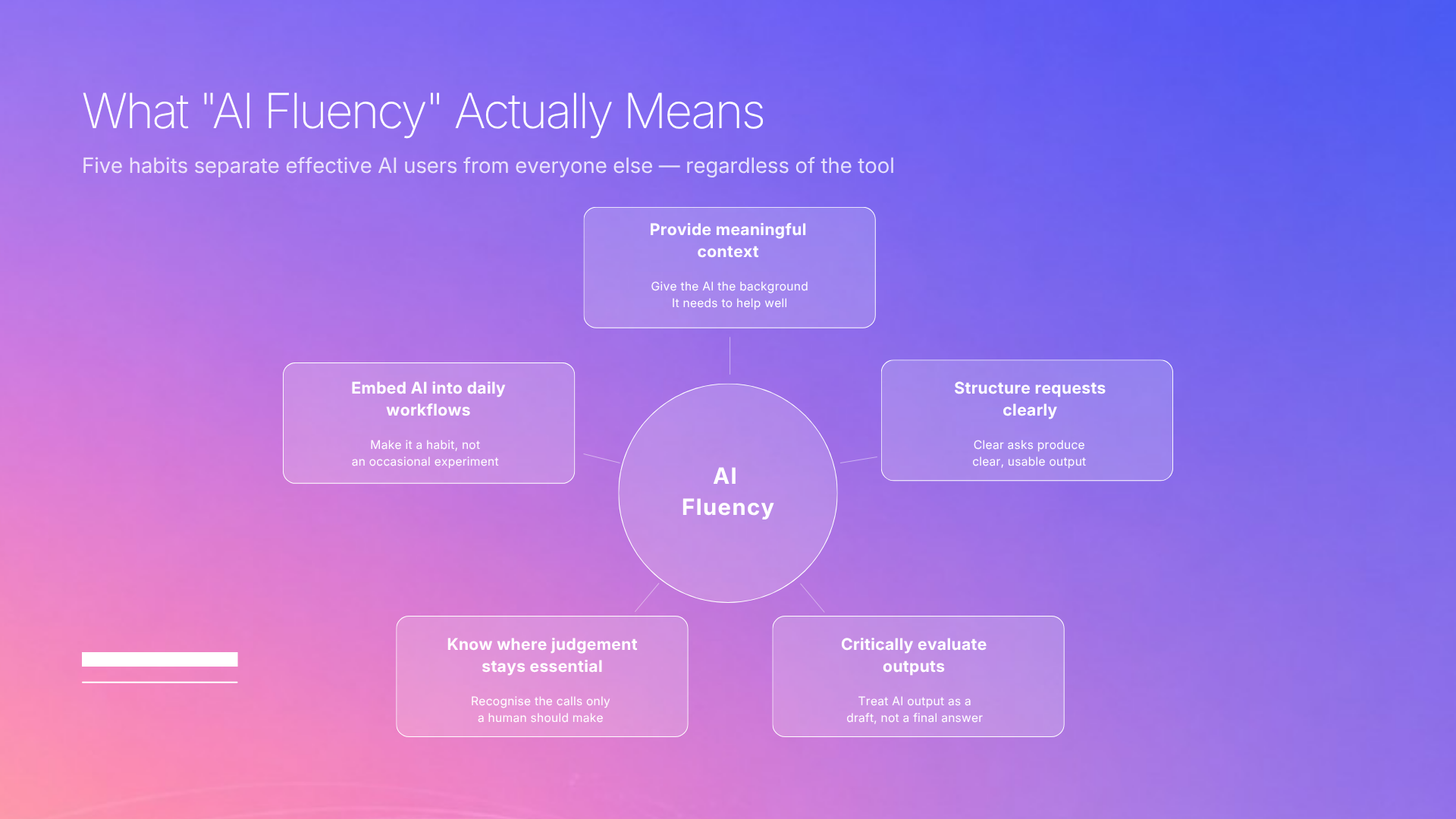
Whether someone uses Claude, Microsoft Copilot, ChatGPT, or another AI assistant, success ultimately depends on the same fundamentals: providing meaningful context, structuring requests clearly, critically evaluating outputs, understanding where human judgement remains essential, and embedding AI into everyday workflows. Technology matters. Capability matters more.
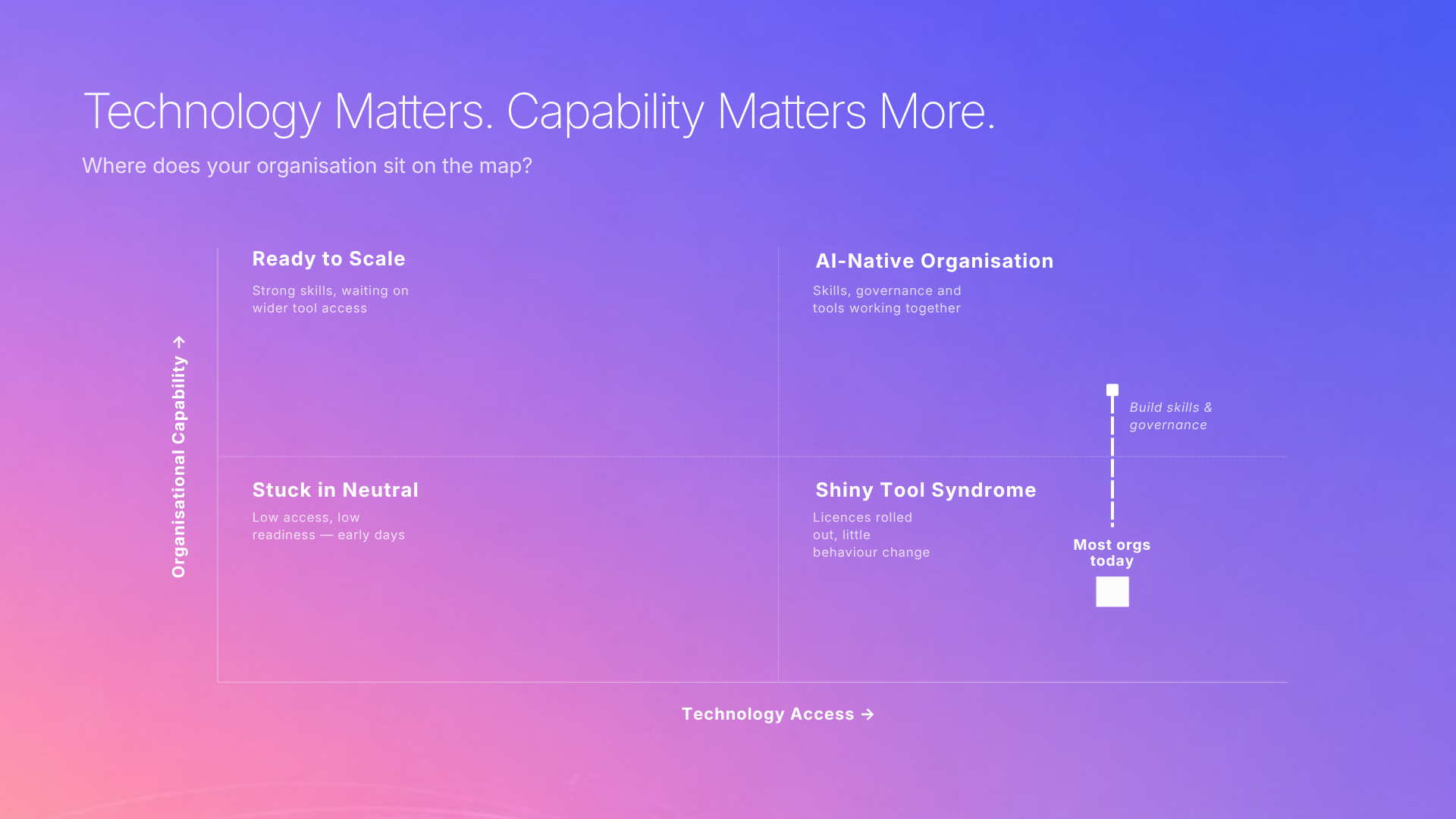
A few years ago, digital literacy became a baseline expectation in most organisations. Today, AI literacy is following a similar path.
Employees who can effectively collaborate with AI are already reducing administrative burden, accelerating research and analysis, creating higher-quality content, improving decision-making, and freeing up more time for strategic work, a shift captured in Microsoft's Work Trend Index research. The organisations that invest in these capabilities today will be better positioned to adapt as AI continues to evolve tomorrow. Because the models will change. The skills will remain valuable.
Most AI journeys begin with individual experimentation. Someone summarises a document, someone drafts a proposal, someone creates a presentation in half the time. These are useful wins, but they rarely create organisational transformation on their own. To move beyond isolated successes, organisations need a structured approach.
At Digital Bricks, we've observed a common pattern across organisations exploring AI. The biggest challenge is rarely the technology itself. More often, it's helping people understand where AI can genuinely add value, creating the confidence to use it responsibly, and embedding it into everyday ways of working. Organisations that succeed are those that move beyond experimentation and create the conditions for AI to become part of how decisions are made, work is completed, and innovation happens across the business.
While public AI tools continue to evolve rapidly, many organisations are looking for ways to introduce AI within existing business environments and governance frameworks, particularly as regulation such as the EU AI Act starts to shape what responsible deployment looks like in practice. That's why Microsoft Copilot has become such an important part of the enterprise AI conversation. Rather than asking employees to leave the tools they already use, Copilot brings AI capabilities into the flow of work across Microsoft 365, Teams, Outlook, Word, Excel and PowerPoint.
For leaders, this creates a more manageable path towards adoption, combining a familiar user experience with enterprise-grade security, existing governance controls, and seamless integration into established business processes. The challenge is no longer accessing AI but it is helping people use it effectively.
The arrival of tools like Claude, Copilot and other AI assistants marks a significant shift in how work gets done. But the organisations that succeed won't be the ones chasing every new model release. They'll be the ones building AI-native ways of working, invest in skills as much as technology and balance experimentation with governance. And they'll focus on adoption rather than access, extending into custom agent development where the business case calls for it. Because in the end, AI transformation isn't a technology project. It's a people project.
Curious about what's possible with AI in your organisation?
At Digital Bricks, we've noticed a recurring pattern. Organisations rarely struggle to access AI. They struggle to turn early enthusiasm into lasting behaviour change. The technology moves quickly. People, processes and culture move much more slowly. That's where most AI initiatives succeed or fail.
Ready to turn AI curiosity into business impact? Contact Digital Bricks and discover how Microsoft Copilot and Azure AI can help your organisation work smarter, faster, and more confidently.


Unlock exclusive insights and stay ahead in the digital world. No spam, only useful content.