Back to Blog
Your Most Diligent Colleague Is About to Be an Agent That Never Logs Off

June 12, 2026
•
AI Agents


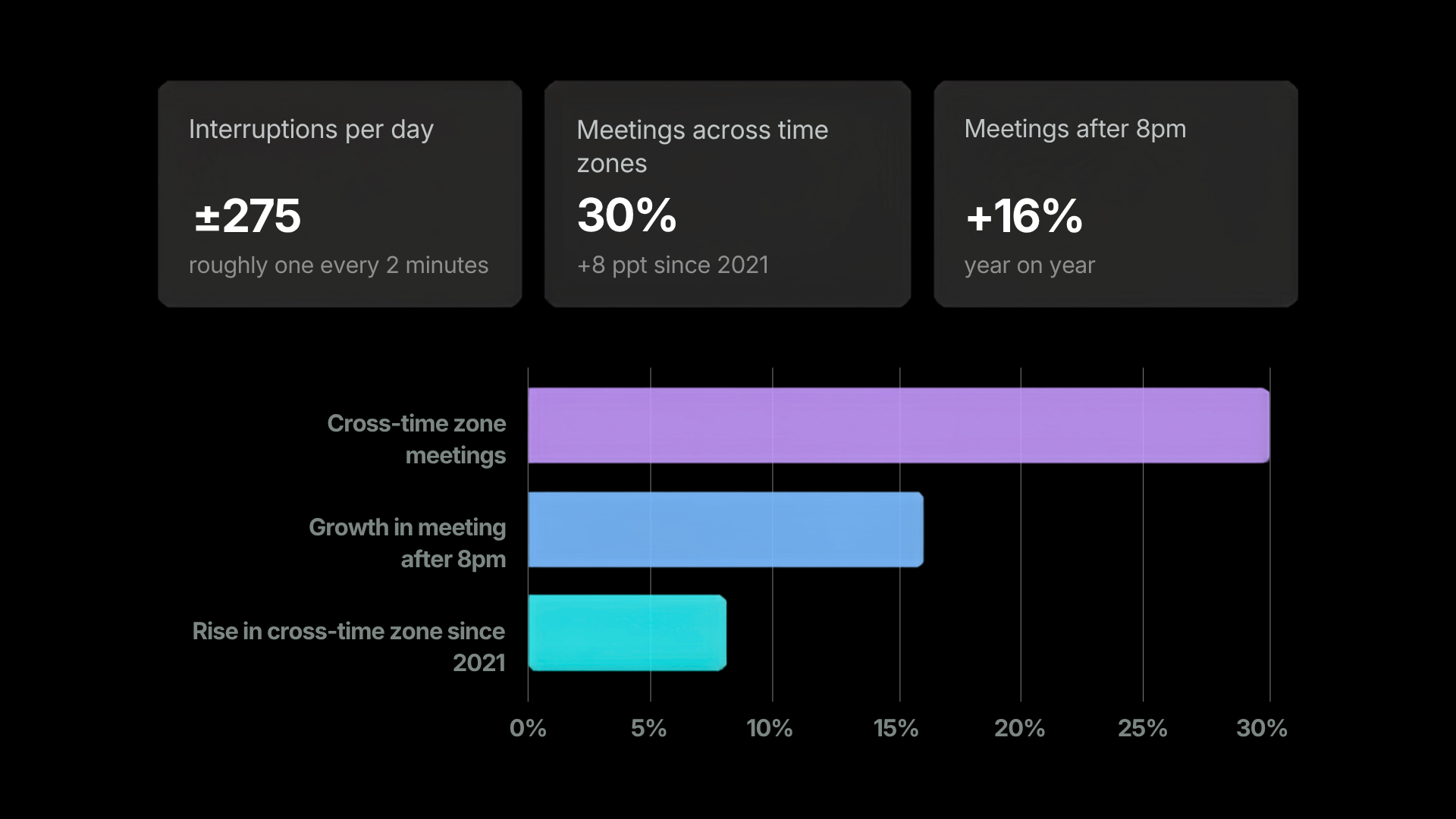
Picture the version of you that exists in the gaps. The one who never forgets to follow up, who notices that a decision has been quietly stuck for nine days, who blocks out the two hours you'll need for Thursday's deliverable before you've even realised the deadline crept up. That person doesn't exist, of course. There aren't enough hours, and attention is a finite resource that the modern working day shreds into confetti. Microsoft's own research puts a number on the damage: the average knowledge worker is now interrupted every two minutes during core hours, roughly 275 times a day.
Microsoft has just introduced an agent designed to be exactly that version of you. And the most interesting thing about it isn't what it can do. It's that it doesn't wait to be asked.
For two years, the story of AI agents has been a story of responsiveness. You ask, it answers. You prompt, it produces. It has been genuinely transformative, and it has also been built around one assumption so obvious that almost nobody questioned it: nothing happens unless you start it. The agent sits there, brilliant and idle, waiting for you to type.
Microsoft's framing of the problem is disarmingly simple. Most systems stop at answering the question, when the real value lies in the follow-through, where a system holds your priorities and acts on them for you. Read that again, because it quietly dismantles the entire premise of the assistant we've all grown used to. Work doesn't happen in single questions and answers. It happens in the long, messy continuity between them, in the coordination that piles up while you're in another meeting, in the decisions that stall when no one is watching them. An agent that only responds is, almost by definition, absent from the part of work where things actually go wrong.
So Microsoft has done something more ambitious than launch a product. It has declared a new category of agent, and given it a name that tells you precisely what's changed: the Autopilot.
An Autopilot is always on. It works autonomously in the background, it operates under its own identity, and it acts on your behalf without being prompted each time. That last clause is the whole revolution compressed into a few words. The copilot we know sits beside you and helps when summoned. The Autopilot keeps working when you've closed the laptop. You stop being the trigger for every action and become something closer to a director, setting priorities and boundaries while the work itself carries on inside them.
It is a genuinely different relationship with software, and it's worth pausing on how strange that still sounds.
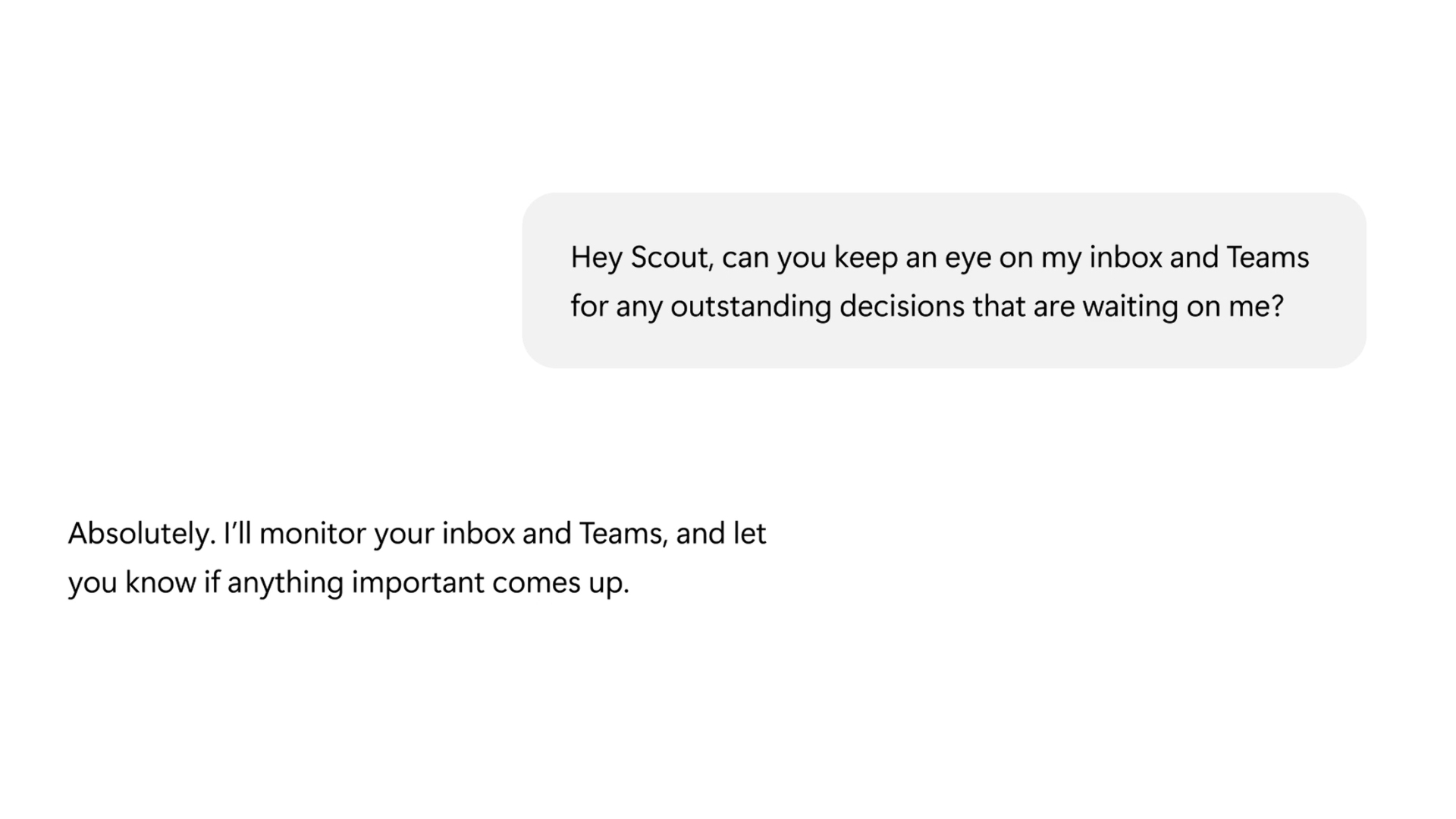
The first Autopilot has a name: Microsoft Scout. And rather than hiding in a separate window you have to remember to open, it lives inside the flow of work you're already in. It runs across cloud, desktop and web, plugging into Teams, Outlook, OneDrive and SharePoint, and into the raw material of your day, your chats, email, calendar and contacts. You talk to it in Teams, and through the desktop app its reach extends to your browser, your local resources and Model Context Protocol servers.
What it actually does is absorb the coordination tax that quietly bleeds hours from every knowledge worker. And that tax is enormous: across Microsoft 365, the average employee spends 57% of their time communicating — in meetings, email and chat — and only 43% actually creating anything. Scout can schedule and align meetings across time zones before you've opened your calendar, flag the meetings that genuinely matter, and have your prep materials ready when you arrive. (The timing is pointed: nearly a third of meetings now span multiple time zones, and meetings starting after 8pm are up 16% year on year.) It spots upcoming deliverables and protects the time to finish them. And, perhaps most usefully, it watches for risks like stalled decisions and surfaces them before they harden into blockers. Over time, through something Microsoft calls Work IQ, it learns how you work and what you care about, so its judgement about what needs to happen next grows steadily sharper.
Here is the thing worth sitting with. Every capability on that list is something a brilliant chief of staff would do for you. The difference is that this one doesn't sleep, doesn't take holiday, and doesn't forget.
There's a detail in the announcement easy to skim past, and it's one of the most telling. Scout is built on OpenClaw open-source technology. Microsoft isn't quietly borrowing from the community either; it's contributing policy conformance back upstream, so that any organisation running OpenClaw can verify whether their environment meets their own security and compliance requirements and get an audit-ready answer.
The strategic message underneath this is worth decoding. The core capability is shared and inspectable; the value Microsoft adds sits in the governance, identity and control layers that make an autonomous agent safe to run at scale. For anyone deciding where to place their trust, that's a more interesting proposition than a sealed black box.
Now for the part that should give any leader pause, because it's the question that separates a genuinely enterprise-ready Autopilot from a clever demo. If an agent acts independently, on your behalf, in your systems, how on earth do you keep it accountable?
This is where Microsoft has concentrated its hardest engineering, and the answer reframes the whole proposition. Every Scout agent operates under its own governed Entra identity, not a shared, anonymous service account. That single design choice means every action it takes is attributable to a known actor your directory already recognises, so you are never left wondering whose authority was just exercised. The credentials behind that identity are scoped to the task, stripped from logs and diagnostics, and managed with the rigour of any first-party Microsoft service.
Identity tells you who is acting. Access control decides what they're allowed to do. Scout can only reach the resources you've approved, sensitive actions can demand a human sign-off before they proceed, and Microsoft Purview data protection policies, including sensitivity labels and loss prevention, are enforced in the moment, before anything is sent or written. The agent doesn't slip past your controls. It works inside them.
That distinction is everything. Autonomy without governance isn't an asset, it's a liability waiting to surface in an audit. The reason Scout is interesting is that the autonomy and the accountability arrived together.
Step back and Scout looks less like a new feature and more like a hinge point in how we think about agents at all. The first wave taught us to delegate tasks, discrete jobs handed over and handed back. The Autopilot asks us to delegate something far more valuable and far more unnerving: continuity. The ongoing custody of our priorities, our schedules, our follow-ups, all the connective tissue of work that has always quietly demanded a human to hold it together.
That hands organisations a set of questions that are strategic rather than technical. Which work is genuinely suitable to give to an always-on agent, and which must stay unmistakably human? Where do you set the approval thresholds so that autonomy speeds you up without quietly removing your oversight? And how do your identity, access and data protection policies need to evolve once agents become actors in their own right inside your directory? These aren't questions for after deployment. They're the ground everything else stands on.
For now, Scout is an experimental release through Frontier, available to a select group of customers in private preview and to Frontier organisations, with access gated behind Frontier enrolment, Intune policy configuration and an opt-in attestation (full setup instructions are here). That cautious rollout is itself the most honest signal in the whole announcement. The technology to make an agent act on its own already exists. Whether it creates value or chaos comes down to how thoughtfully an organisation prepares its identity model, its policies, and its own clear-eyed definition of which decisions still belong to a person.
The agent that never logs off is coming. The organisations that benefit will be the ones who decided, in advance and on purpose, exactly what they wanted it to do while they slept.
At Digital Bricks, this is the shift we help organisations navigate, turning new agentic capability into a clear strategy for governance, adoption and measurable value. If you're wondering what an always-on agent could mean for your organisation, and how to bring one in without losing control of it, let's talk.


Unlock exclusive insights and stay ahead in the digital world. No spam, only useful content.