Back to Blog
Frontier Sessions 001 at Microsoft: What Becoming a Frontier Firm Actually Takes

June 30, 2026
•
News

Thefrontier is not a place you arrive at. It is a way of working you choose tobuild.
Most AI events tell you what's coming. A recent session at the Microsoft office in the Netherlands asked a harder question: why are so many organisations standing still while a handful pull away?
For a few hours, leaders from across industries sat with that question together. No product demos disguised as keynotes, no vendor theatre. Just three practitioners from Digital Bricks who work inside this problem every day, sharing what actually moves an organisation onto the frontier, and what quietly keeps it stuck.
This piece captures what came out of that room,and what it means for any organisation weighing up where AI fits into how it works.

Frontier Sessions is an event series hosted by Digital Bricks, built on a simple and surprisingly rare idea: get leaders who are all wrestling with the same shift into one room, compare notes honestly, and let people who have guided organisations through the change share what they have learned, both the wins and the dead ends.
The framing for the day was a single uncomfortable fact. Microsoft's2026 Work Trend Index found that organisational factors such as culture,manager support and talent practices account for more than twice the AI impactof individual effort and skill. In other words, the bottleneck was never thetechnology. It's how work is structured around the people using it.
So the first session was built around the three places where that structure either holds or breaks: Adoption, Leadership and Strategy, and Development and Scaling. Three vantage points, one argument building across the afternoon. What follows is the throughline, and the takeaways worth carrying home.
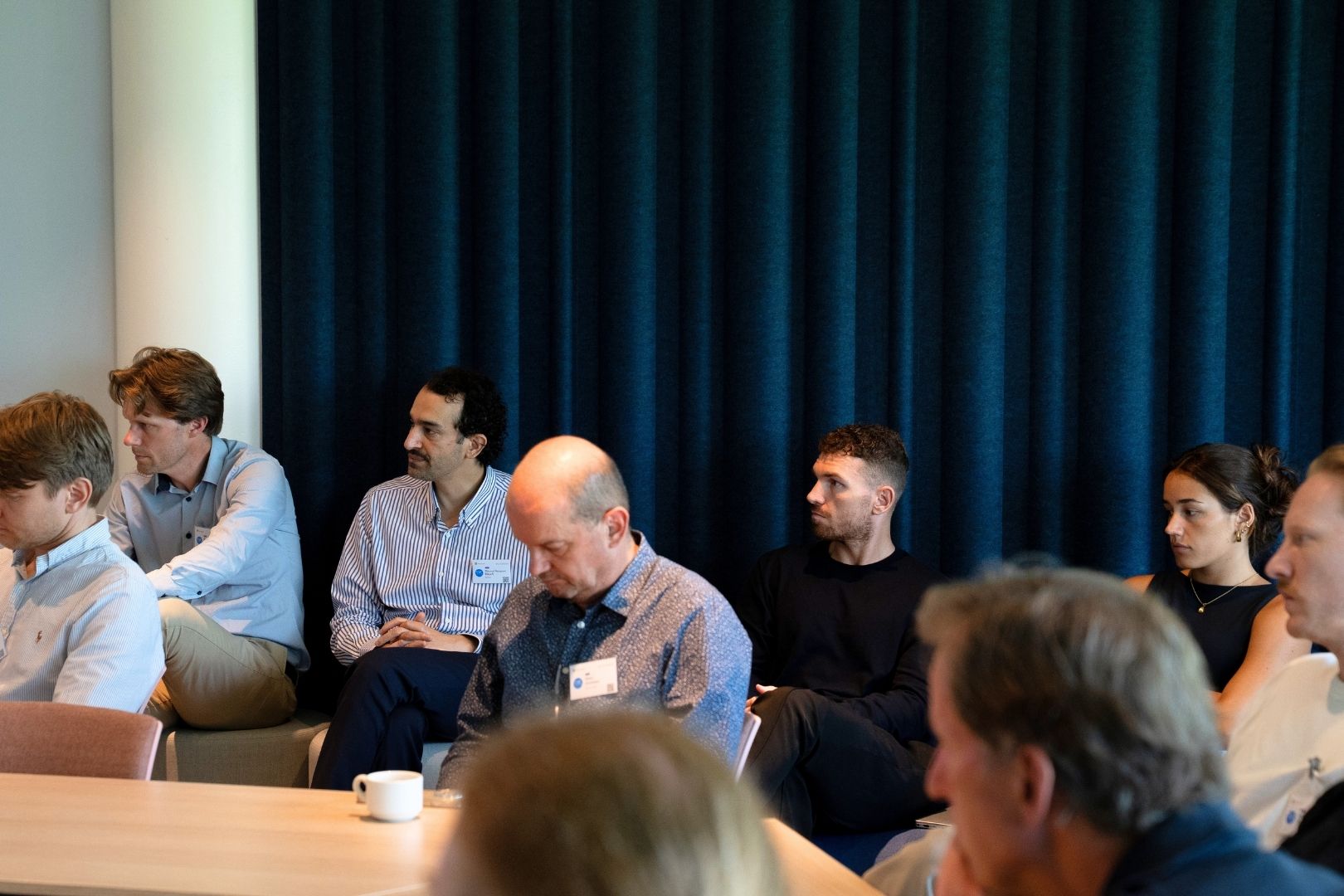
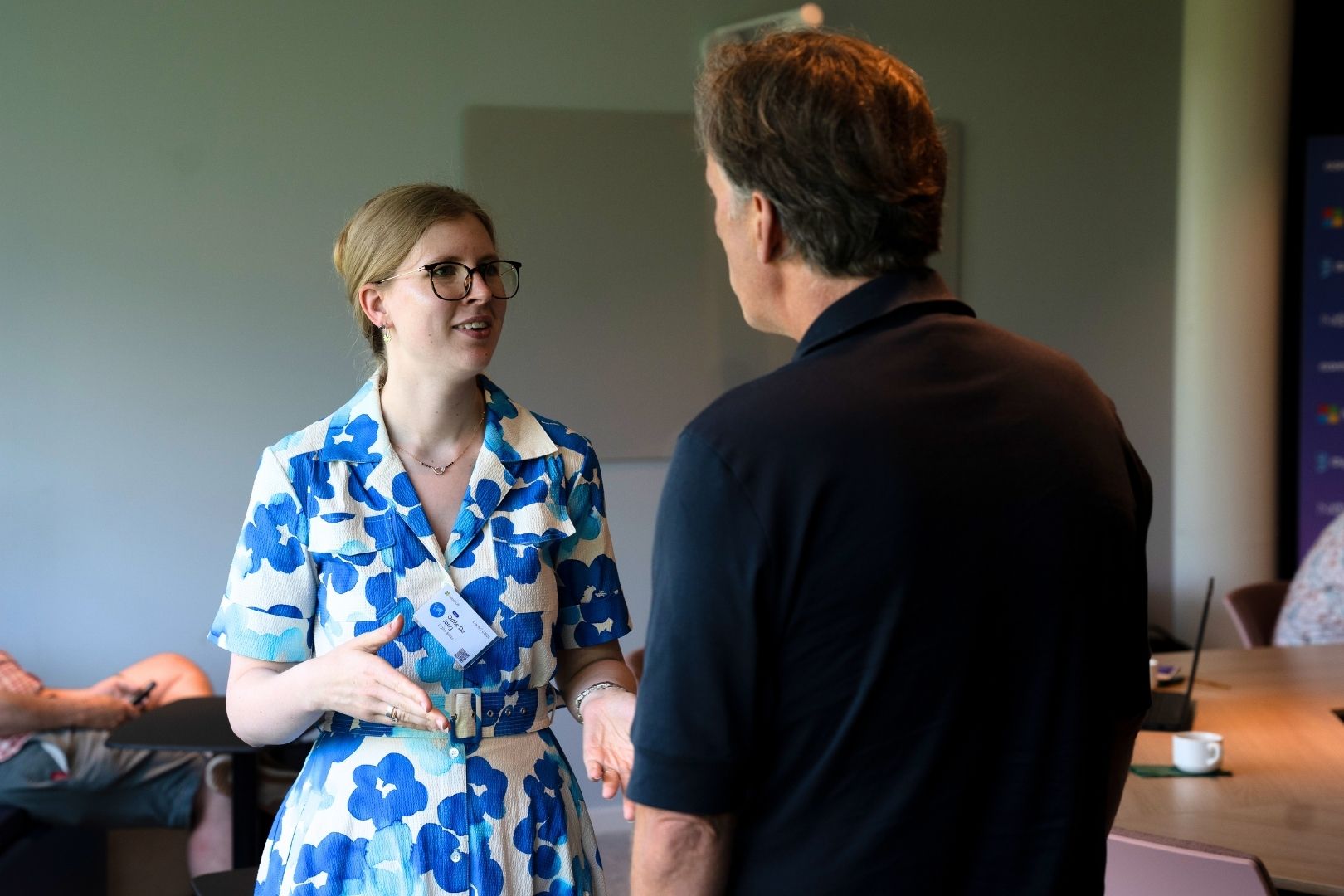
Odile de Jong, Adoption Lead & AI Centre of Excellence
Odile started with a line that quietly rearranges your priorities: in an AI-drivenworld, the ability to learn faster than your competitors is becoming the only sustainable edge there is.
Then she named the trap most organisations are already in. There's a paradox at the heart of adoption: the urgency to use AI is colliding head-on with the fear of changing how work gets done. People feel the pressure, but 45% admit it feels safer to stick with existing goals than to try something new. So AI gets bolted onto old processes, used as a clever side tool, and delivers a fraction of what it could.
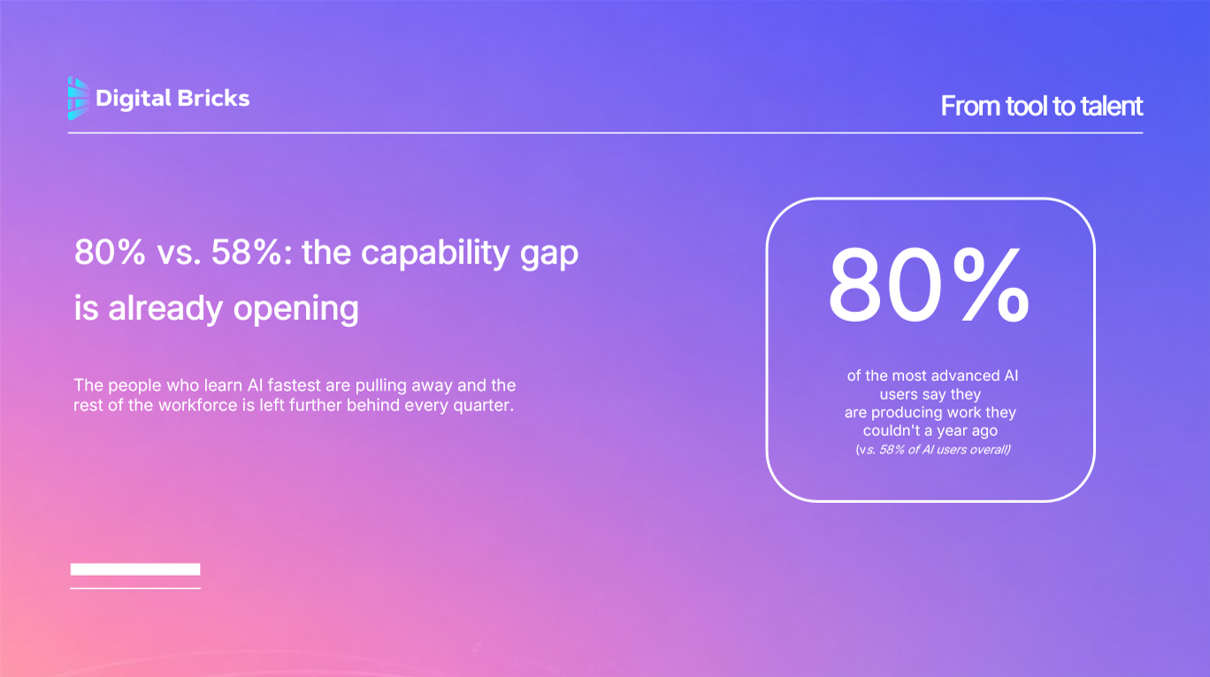
And while everyone hesitates, a gap is opening in plain sight. Among the most advanced AI users, 80% say they're producing work they couldn't have a year ago, against 58% of users overall. The fast learners are pulling away, and every quarter therest fall a little further behind.
Her real point landed harder than any statistic: the biggest driver of AI's value isn'tthe technology, and it isn't even individual talent. It's whether your organisation is built to learn from what its people and its AI keep discovering. The answer is to treat the whole enterprise as a learning system,a loop where every project and every AI interaction produces insight that gets captured, shared across silos, and built back into how work is done.
What made the point land was that she refused to leave it at strategy. That loop runs on psychology, not tooling: psychological safety so people admit what isn't working, a growth mindset so they reach for new tools instead of fearing them,hands-on practice instead of one-off training, and the discipline to question broken processes rather than automate them. The engine that holds it together is an AI Centre of Excellence, the structure that turns adoption from a campaign that fades into a system that compounds.
The takeaway for leaders: Frontier Firms build owned intelligence that rivals can't copy. Choosing not to become a learning system is the biggest risk of all.
Moritz Kentmann, AI Adoption Consultant & Leadership Psychology
Moritz opened with a story from the week's headlines: the Trump administration had just suspended access to two of the most capable AImodels on the market, citing safety. Good leadership, he asked, or astrategy-shaped hole where a decision should be? He left it hanging on purpose,because it sets up the real subject. Technology changes fast. Leadership ecides what it becomes.
Then he did something braver than most keynotes manage: he spent his time on what goeswrong. Three pain points, each one a quiet killer.
A strategy nobody can feel. Researchshows 93% of senior AI leaders say the real barrier is cultural, nottechnical, yet only around a quarter of workers think their leadership is aligned on AI at all. Into that vacuum rushes fear, the unspoken worry that I'm training the system that will replace me. His case study was Duolingo, whose CEO announced an "AI-first" future and watched a sensible plan detonate into a backlash over job cuts, simply because the tone outran then arrative. The fix isn't a better memo. It's an AI strategy blueprint that starts with the mission and makes the benefit real for the people living it.
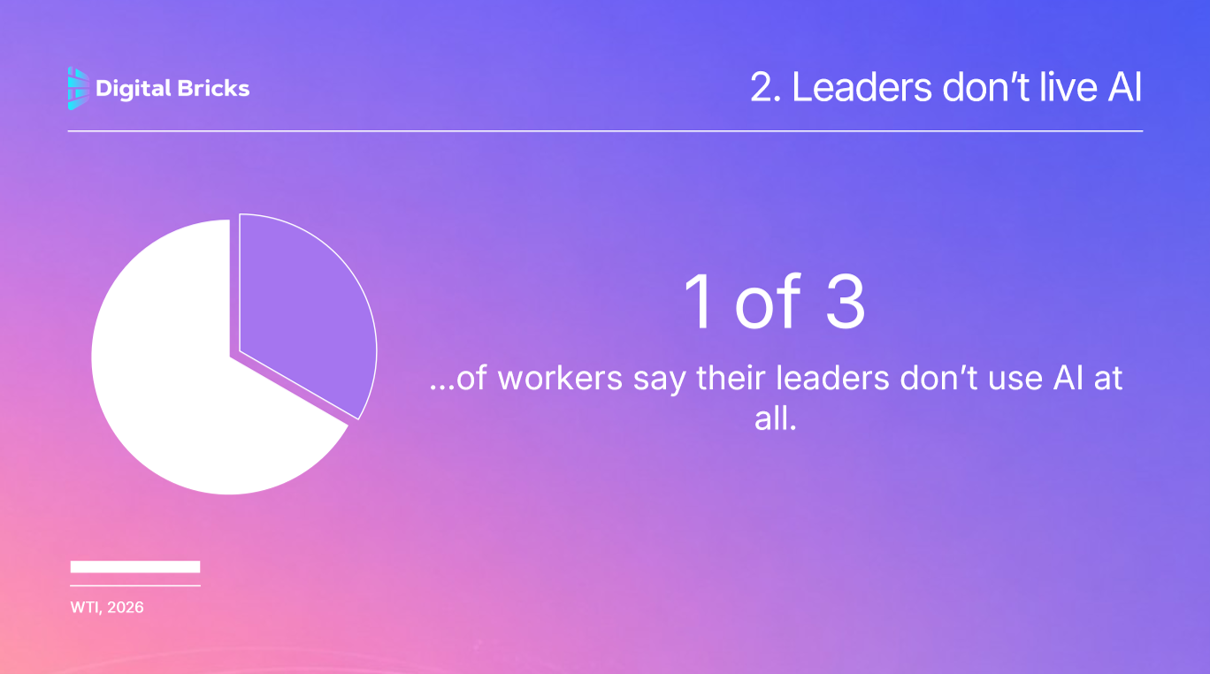
Leaders who talk AI but don't touch it. Roughly one in three workers say their leaders don't use AI at all, and when that's true it stays theoretical for everyone below them. Where leaders visibly model it, trust and realised value climb measurably. His intervention was almost disarmingly simple: sit down with your team, run a discovery session, map your real pain points, and explore which agents could solve them, together, out loud.
Old metrics quietly strangling new work. Only about 13% of workers feel rewarded for redesigning work with AI, so most people use it without rethinking the workflow, and the impact stays small. The unlock is a different question. Not "how do we add AI?" but "if AI exists, how should this work bedone now?" He pointed to DBS Bank, where the CEO redesigned customer service, fraud and compliance around AI rather than on top of it, with clear governance and serious reskilling, and reportedly generated over $270M in value precisely because therules, workflows and ownership were unambiguous.
His parting line answered his own opening: you can lead AI by controlling it, or lead it by transforming the work around it.
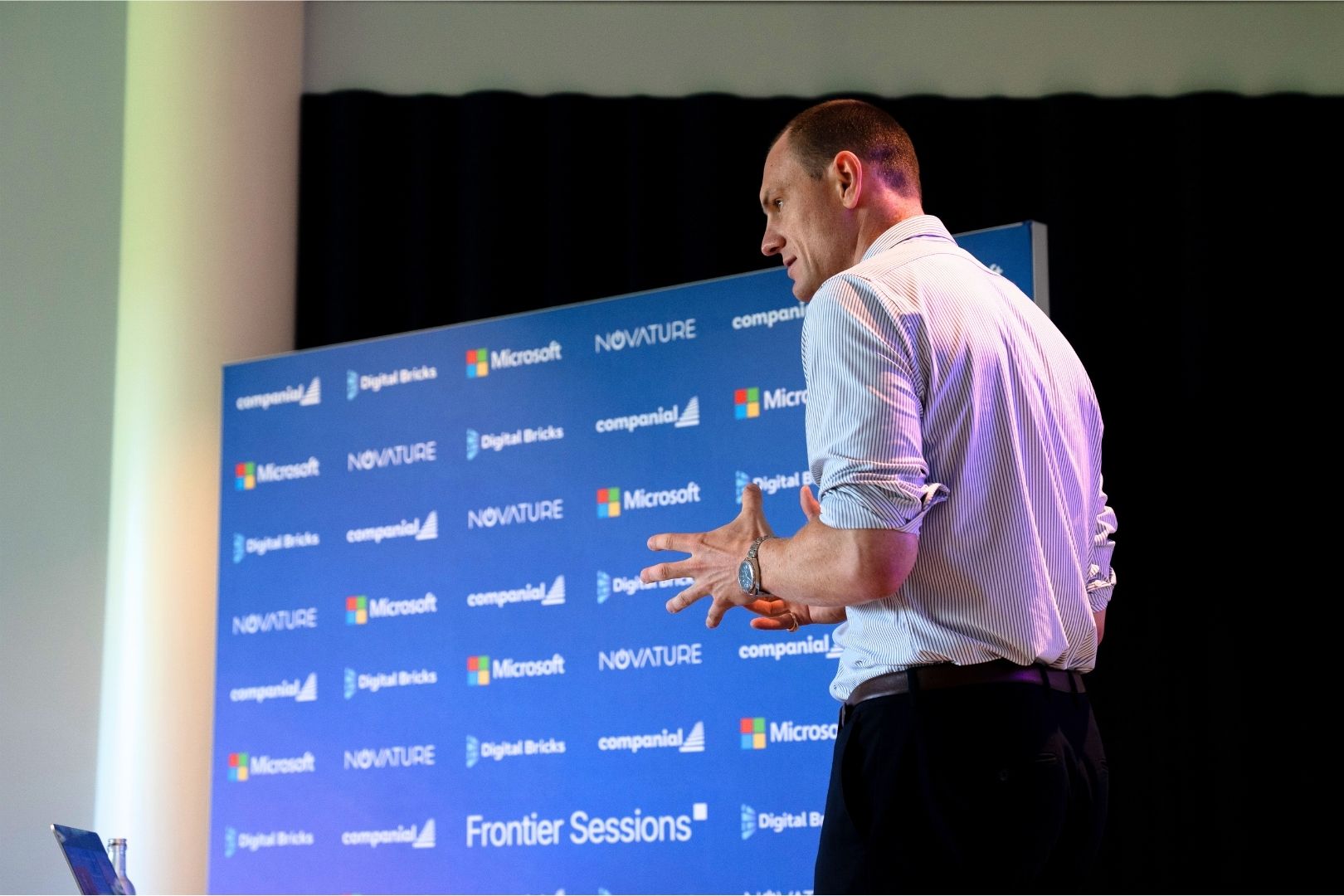
Max Dinser, Co-Founder & CEO, Digital Bricks
Odile had the people. Moritz had the leaders. Max had the build, and this is where the afternoon stopped being abstract.
He laid out the journey to a Frontier Firm in three honest phases: first an assistant forevery employee, then agents joining teams as digital colleagues taking direction, and finally human-led, agent-operated work where people set direction and agents run the process, checking in when they need to. Then he stopped describing and started showing.
Live, in the room: a comprehensive real estate AI agent built on Azure AI Foundry. A reconciliation agent that quietly handles month-end finance. An onboarding agent that spins up a Microsoft 365 tenant on its own. The point wasn't any single agent's cleverness, it was watching value land across departments, from finance to HR to sales, in front of an audience that had spent the afternoon told it was possible and now got to see it.
He was refreshingly unromantic about the spectrum, too: agents that simply retrieve and summarise, agents that take action and automate, and autonomous agents that plan, direct other agents and escalate, with the blunt reminder that the morecapable they get, the more governance the whole lifecycle demands.
The part that travels best is a method any organisation can run on Monday. Start with painstorming: where do the delays, the rework, the manual handoffs and the daily frustrations actually live? Then capture each one on an agent canvas: the problem, the process, the systems, the value. That's how "we should useAI" becomes a real, prioritised, buildable list.
And he closed not with a summary but a challenge. The next step is one decision. Pick a single team and one workflow, and redesign it around AI. One move, one team, one workflow.
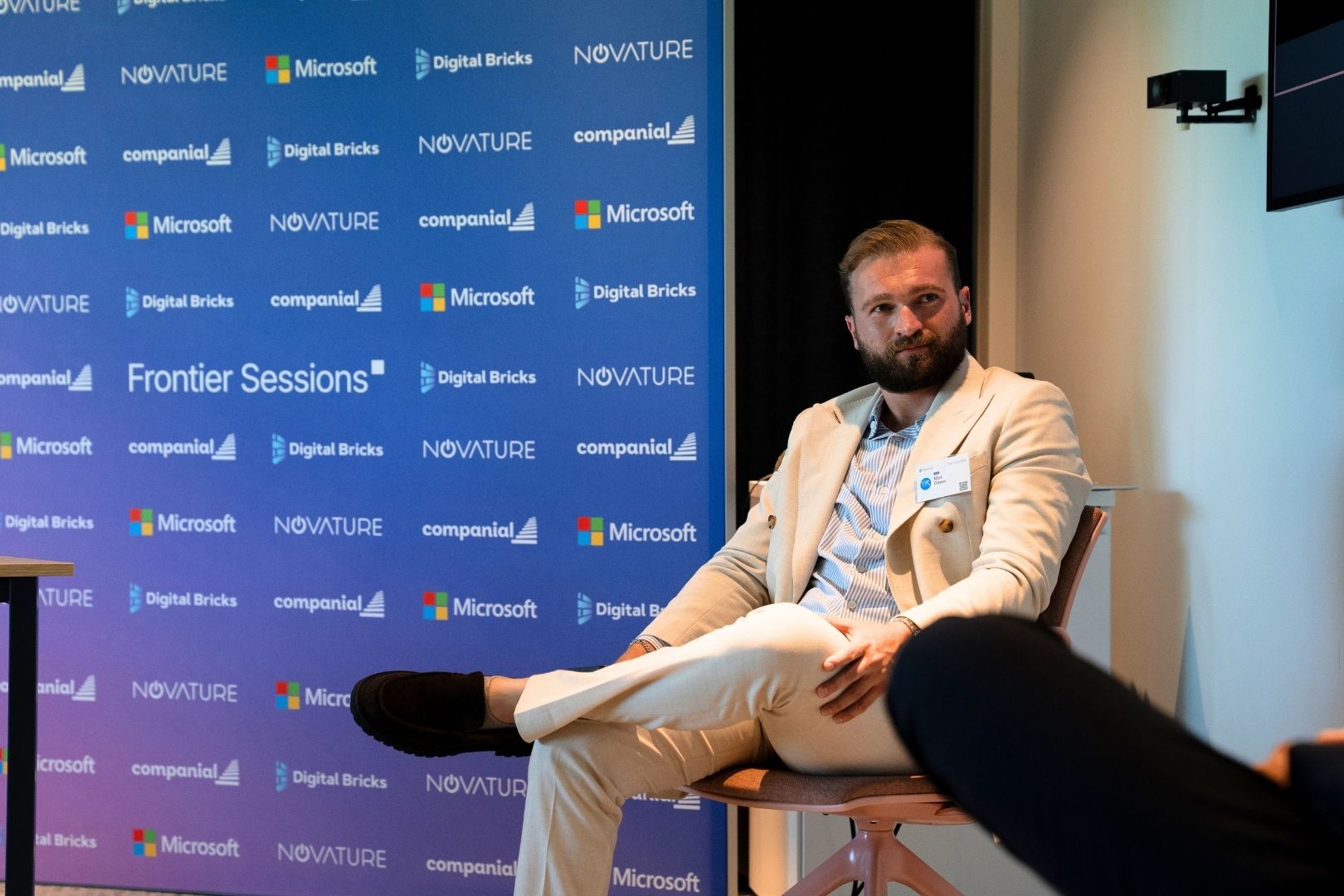
Three perspectives, one argument that built across the afternoon: adoption fails without a learning system, the learning system fails without leaders who live it and tell its story, and all of it stays theoretical until someone builds, scales and governs the agents that do the work.
That's the frontier. Not a model or a licence, but an organisation that has decided to learn faster than everyone else. The organisations pulling ahead aren't the ones with the best tools. They're the ones that rebuilt how they work around them, and kept learning while everyone else waited for certainty.
The good news in all three sessions was the same: none of it requires permission or a perfect plan. It starts with one team, one workflow, and the decision to begin.


Unlock exclusive insights and stay ahead in the digital world. No spam, only useful content.